Platform & governance Perspective
Transforming Enterprise Application Development: The Low-Code/No-Code Advantage
In his book Patterns of Enterprise Application Architecture, British software developer Martin Fowler defined enterprise apps rather succinctly low-code.

In this article 0 sections
In his book ‘Patterns of Enterprise Application Architecture’, British software developer Martin Fowler defined enterprise apps rather succinctly.
An enterprise might have thousands, or even hundreds of thousands, of employees. Millions of customers could be interacting with their applications on a regular basis. Just think of a giant retailer handling 100,000 orders daily, each order potentially interacting with a list of millions of products. This massive scale puts unique demands on enterprise software:
- Comprehensiveness: Enterprise solutions must handle intricate and granular requirements of the business process, and navigate a huge range of tasks and processes, often spanning multiple departments or business units.
- Robustness: These systems must work reliably under heavy use. Downtime can lead to significant losses in revenue or productivity.
- Scalability: The software needs to grow seamlessly with the enterprise. Adding new users, data, or features shouldn’t create bottlenecks.
- Security: Protecting sensitive company and customer data is absolutely critical for any large-scale enterprise application.
Also read: How Low-Code/No-Code Simplifies the 4DX Framework
What’s in this guide?
With this guide, we hope to answer some difficult questions about enterprise application development and how low-code platforms can help businesses manage large-scale operations more efficiently. Some key questions we’ll explore include:
- What is a low-code platform, and how does it differ from traditional software development?
- Why are enterprises adopting no-code and low-code platforms for faster and more scalable software solutions?
- Can low-code platform development handle the complexity and robustness required for enterprise software?
- How do these platforms contribute to business process automation without compromising security?
- What are the long-term benefits of low-code and no-code platforms for businesses looking to modernize their software infrastructure?
By the end of this guide, you’ll have a clear understanding of how low-code software is transforming enterprise applications and whether it’s the right approach for your business.
First let’s understand what makes enterprise apps particularly complicated.
The Complexity of Enterprise Applications
Let’s understand each of these unique aspects of enterprise development in detail.
Comprehensiveness
Think of a small business app for a specific task (like point-of-sale or customer relationship management). In an SMB, everyone wears multiple hats and can easily communicate needs.
Now picture an enterprise. For the same application, there will be stakeholders from dedicated departments (sales, marketing, product, etc.) Each department has its own workflows, processes, and data needs. Each stakeholder has their motivations and priorities, and they’ll insist on getting the features they want. Enterprise applications have to accommodate every process. It has to integrate into existing workflows and support the way each team operates.
In the same way, a small business application may be able to overlook occasional exceptions. Enterprise applications have to account for even seemingly rare scenarios. Imagine a 2% edge case that, in an enterprise context, could impact hundreds of transactions or customers. This attention to detail, granularity, and inclusivity is what makes an enterprise application different from an SMB application.
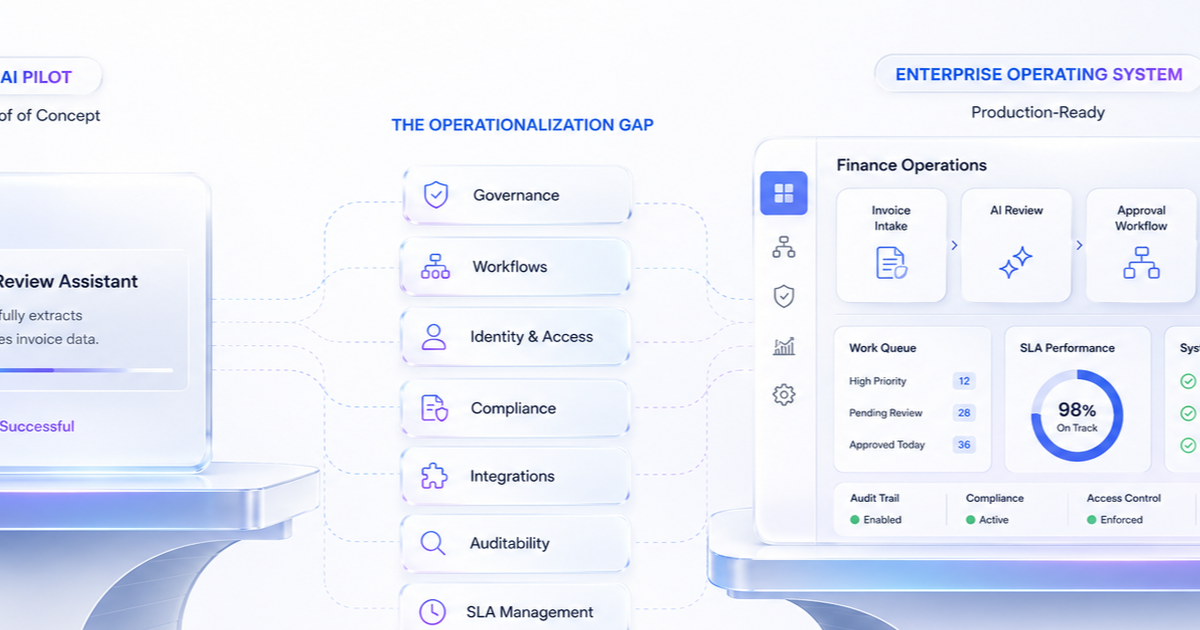
With the best low-code platform, organizations can customize workflows without extensive coding.
Robustness
Imagine the difference between a local coffee shop and an international airport. Applications for both need to be robust. But the implication of 0.1% downtime is massive for an enterprise.
An enterprise app needs to be available 24/7, with minimal downtime. Downtime can lead to lost productivity, revenue, or even reputational damage. An enterprise app is built with care for peak usage. Think of a retail app during the holiday season or a travel booking platform during school holidays. Such applications have to anticipate and overcome potential problems. This means having built-in redundancy and failover mechanisms. Even if one component experiences an issue, the entire system shouldn’t collapse.
This is why many enterprises are moving towards low-code platform development, which enables rapid iterations, built-in redundancy, and cloud-based failover mechanisms.
Scalability
Enterprise applications are built to adapt to multiple dimensions of growth. For starters, enterprise applications amass vast amounts of data – customer records, transactions, and analytics. The app’s architecture has to support efficient storage and retrieval of this data, even as it exponentially grows.
As businesses expand, processes and workflows become increasingly complex. A scalable enterprise app has to handle new approval chains and integrations. It has to do so without compromising speed or efficiency. Many enterprises operate globally. Scalability means supporting users in different time zones, complying with regional regulations (like data privacy laws), and offering the app in multiple languages. This requires careful consideration of infrastructure, localization, and compliance.
By leveraging the best low-code platform, businesses can seamlessly scale their applications and minimize the development overhead.
Security
Zero Trust Architecture: The traditional idea of a secure perimeter is no longer sufficient. Enterprise apps are built based on a zero-trust approach which assumes no user or device is inherently trusted. Such apps have to support continuous authentication and authorization at every level of access.
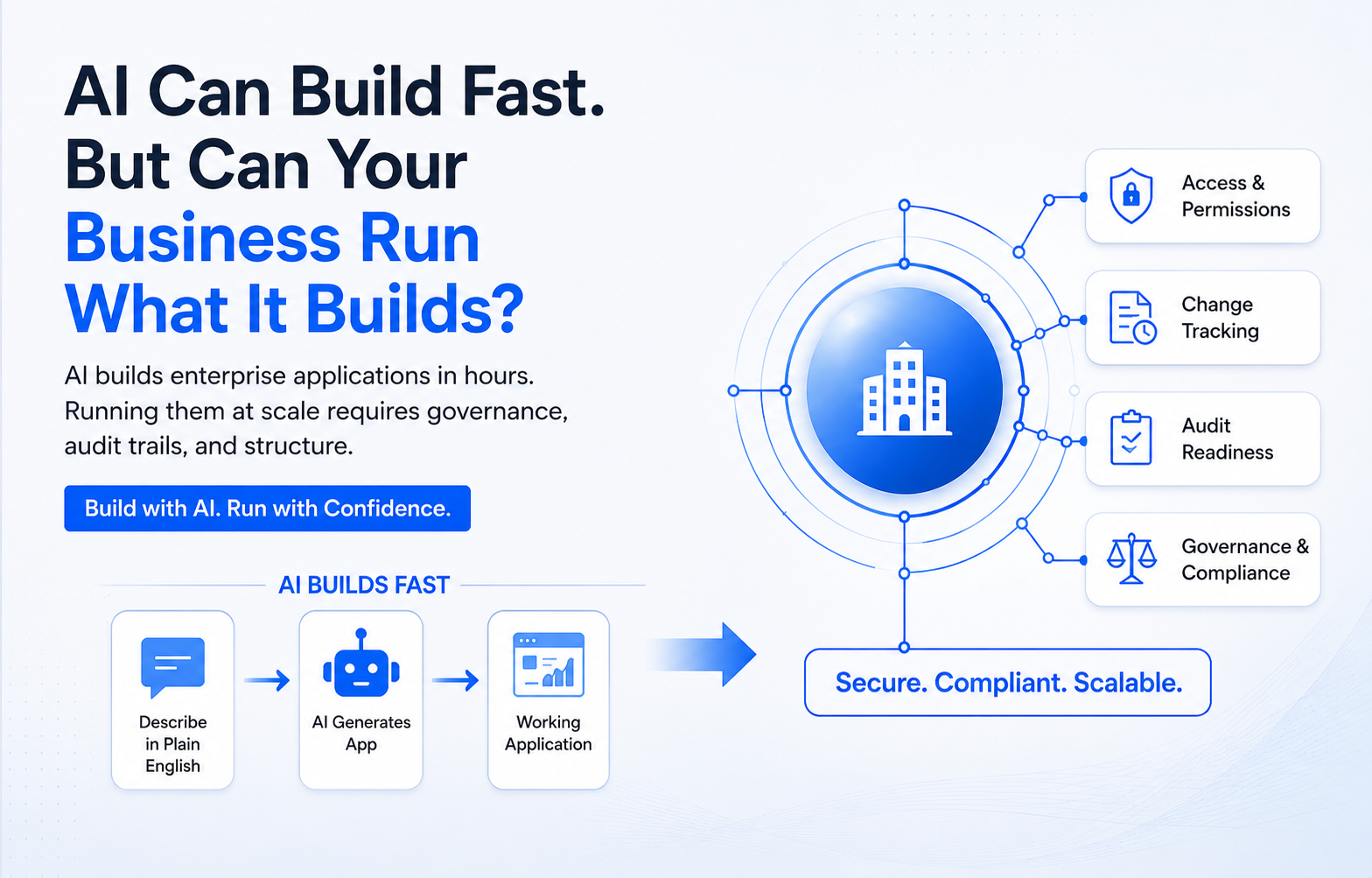
Enterprises often need to adhere to strict industry regulations like PCI-DSS (payment cards), HIPAA (healthcare), or GDPR (data privacy). These frameworks dictate how data is collected, stored, processed, and shared. Also, enterprise apps have to support auditing, access controls, and reporting capabilities to meet these standards.
One of the advantages of low-code platform development is that many platforms come with built-in compliance features, security controls, and governance mechanisms.
Also read: Find the best Low-Code platform with three uncompromising questions
The unmet challenges of enterprise app development
Every enterprise wants a technology platform that’s faster, better, and more affordable. However, many traditional solutions struggle to pass the four-stage filter we’ve discussed: comprehensiveness, scalability, robustness, and security. For most of the past 25 years, this has been the reality.
That is, until the rise of low-code/no-code development in the early 2020s. Today, true low-code/no-code platforms are becoming the go-to choice for many Fortune 500 companies. Why? Because they’re finally a technology solution that caters to the specific needs of enterprises. They tick all four essential boxes while also delivering the benefits of speed, agility, and lower development costs. Let’s break down how low-code/no-code works.
For businesses looking to build scalable applications, especially mobile solutions, low-code/no-code platforms for mobile app development have emerged as a game-changer.
What is Low-code/No-code Development?
Low-code platforms provide a visual development environment where applications can be built by dragging and dropping pre-built components, rather than writing extensive code from scratch. This accelerates development and allows for rapid iteration and deployment.
No-code platforms take low-code one step further by enabling even non-technical users to build applications through intuitive interfaces and configuration, without any coding required. While no-code platforms are suitable for simpler applications, more complex enterprise requirements often necessitate the use of low-code platforms. These allow developers to extend and customize applications using code when needed, while still leveraging the visual development environment for faster delivery.
This flexibility is especially crucial when enterprises need mobile solutions, and low-code/no-code platforms for mobile app development provide an efficient way to build cross-platform applications
Why Low-Code/No-Code Is the Game-Changer for Enterprise App Development?
Let’s be frank: traditional application development is a major bottleneck for most enterprises. The backlog is overflowing, IT is stretched thin, and finding highly skilled niche developers is time-consuming and costly. Low-code development fundamentally shifts this dynamic. Here’s how:
- Democratizing Development: By unlocking the app-building potential of citizen developers – employees who understand the business – enterprises can rapidly address niche needs. This frees IT professionals to focus on strategic projects and complex integrations.
- Agility at Scale: Pre-built components and visual development tools dramatically accelerate development cycles. As Gartner notes, low-code/no-code platforms replace traditional development methods for many business applications and offer a quicker, cost-effective alternative to commercial software.
- Productivity Gains for Developers and the Business: Studies indicate low-code/no-code can make developers up to 90% more efficient, and as Forrester notes, achieve a 10x speed increase compared to traditional coding. This translates into tangible business value – faster solutions, higher responsiveness, and greater overall agility.
But just any low-code/no-code platform doesn’t cut it. That’s why - Amoga.
Amoga – One-stop Low-code/No-code Platform For Enterprises
We all know that the devil’s in the details when it comes to enterprise software. True, your employees use numerous niche apps, each carrying a subscription cost and a security risk. But you can’t replace all those with a generic app builder. You need a solution built for the realities of your business.
This is where Amoga stands out.
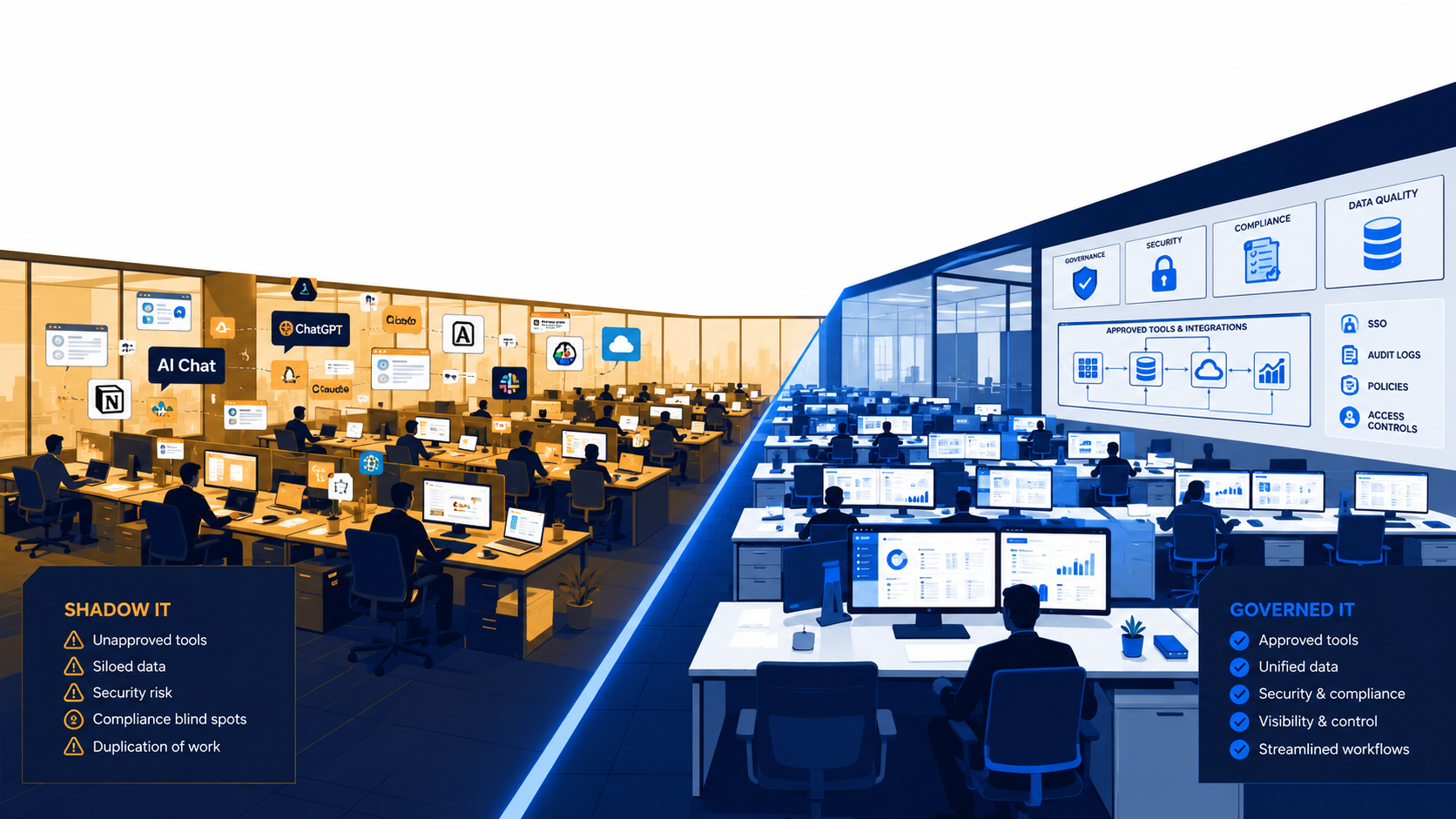
Amoga allows employees to build custom applications for their specific needs. Think of a sales app built by the sales team, not just for the sales team. This targeted approach drives faster development and user uptake. Building in-house with Amoga can replace a patchwork of niche SaaS tools. This offers centralized control for security and governance, plus potential cost savings.
Amoga is built for enterprise demands: scalability, security, and integration with core systems. Unlike standalone app builders, Amoga lets you build apps that fit seamlessly into your existing infrastructure. The one thing that can unfetter enterprise productivity is a technology suite that brings down the walls of rigidity. Amoga’s low-code/no-code platform is precisely that suite. Get in touch for more information on specific use cases we’ve realized for our enterprise customers.
Frequently Asked Questions – Low-code Enterprise Apps
Absolutely. Many large companies use because it helps them build apps that integrate with their existing systems. It’s scalable, secure, and allows businesses to create solutions without needing a huge development team.
Good have strong security features like encryption, access control, and regular updates. Many also follow strict industry rules to keep your data safe. Like any software, security depends on how well it’s managed and maintained.
needs a little coding, so developers can tweak apps if needed. is for people who don’t code at all and want to build apps with just drag-and-drop tools. Both help businesses launch apps much faster.