Agentic enterprise software Perspective
Are You the Boiling Frog? (And How Low-Code Helps You Adapt Before It's Too Late)
Corporate metaphors are black boxes sometimes they fall flat and sometimes hit a home run. The “burning platform” conveys urgency for low-code.

In this article 0 sections
Corporate metaphors are black boxes – sometimes they fall flat and sometimes hit a home run.
The “burning platform” conveys urgency for change, the “iceberg” points towards hidden organizational challenges, and the “oxygen mask” principle talks of self-care before helping others. Yet perhaps none is as subtly powerful as the “boiling frog” metaphor.
The Danger of Comfort Zones
The story goes: place a frog in boiling water, it jumps out immediately. But put it in pleasant water and gradually increase the heat, it fails to perceive the danger until it’s too late. The frog’s comfort becomes its trap.
The ‘boiling frog’ is a metaphor for the perils of being in the comfort zone. For CIOs, these perils are obvious.
However, 9 out of 10 organizations still feel that their IT departments need to do much more to empower the people who depend on getting the right applications to do their work faster and better. When others perceive your team or department as stagnant, and yet you remain oblivious to this perception, you’re essentially caught in a battle that you are not ready for, and one you didn’t even see coming. that you’re not even aware is raging on. You’re, unfortunately, not too dissimilar from that frog in warming water.
Here’s a quick diagnostic quiz for you.
A Quick Quiz for CIOs
If you answer “yes” to three or more of these six statements, you might be in – or heading towards – your own boiling pot.
- Your team spends over 50% of its time maintaining the existing IT ecosystem and firefighting unexpected issues.
- When someone from the operations team requests seemingly simple changes, your IT leaders hesitate to commit to quick turnarounds because they know the hidden complexities.
- When you understand the need for quality control, you also see that critical P0 and P1 fixes have become a regular part of your sprint cycles.
- When a bug appears, troubleshooting takes too long because your team has to peel back layers of legacy code. Moreover, there are no documented change logs, and experience has taught the team to expect complicated, even unknown, dependencies.
- You find that your strategic initiatives and groundbreaking projects are always delayed and eventually fizzle out because most of your resources are tied up in maintaining IT systems.
- You have grown accustomed to accepting certain IT limitations, such as slow delivery and growing technical debt, as “just the way things are,” given the history of your organization’s technology choices.
Of course, like every diagnostic quiz, our “boiling frog” quiz is oversimplistic. However, every CIO agrees that their customers are the business operations teams. So, the operations teams’ perception trumps any such quiz’s analysis.
What Operations Teams Want from IT
The reality is that in 9 out of 10 organizations, operations want more from IT. They want better features, faster. They want confidence that apps won’t be buggy and won’t break. They want to easily request new features and apps.
Overall, operations want everyone to be able to do their work error-free, without having to remember complex processes and to do it quickly. But this is easier said than done. When operations don’t get what they want, they can quickly label IT as a team stuck in a comfort zone, and the entire business pays the cost by becoming resigned to lethargy. While no CIO wants this perception to persist, they still have to operate within the constraints and complexities inherent in IT.
Challenges IT Leaders Face
- The team the CIO leads faces pressure to deliver features and apps that “work just fine,” whereas they would prefer to build solutions that “work well,” are easy to maintain, can be easily built upon in the future, and use clean code. However, this desire conflicts with the speed-to-market demand, which takes the highest priority.
- IT expertise rapidly becomes obsolete. What was cutting-edge three years ago is likely obsolete today, impacting both investment decisions and talent strategy. Some of your most experienced IT leaders cut their teeth building systems in languages like COBOL. The decisions today are influenced by what they learned a decade ago. Soon enough, PHP programmers will find themselves in a similar struggle. Over time, too many decision-makers in IT think using thought patterns whose origin is on technologies that are hurtling towards obsoletion. When this happens, the organization on the whole becomes lethargic.
- The average time a person stays in an IT team across various roles is shorter than in any other function. This naturally results in most developers and programmers feeling a stylistic disconnect with the IT ecosystem they must protect, maintain, and improve.
These constraints will never go away. That is why an organization needs a CIO. But what does a CIO need to be able to jump off the pan the moment the heat is turned on?
The need an ecosystem that supports:
- Low-code development
- Super-fast development
- Secure development
- Versatile development
Too many times, platforms have claimed to be powerful enough to tick all these boxes. Too many times, CIOs have been failed by these promises. Thankfully, the landscape is changing, and that is primarily because of low-code no-code platforms.
The Need for Low-Code Platforms
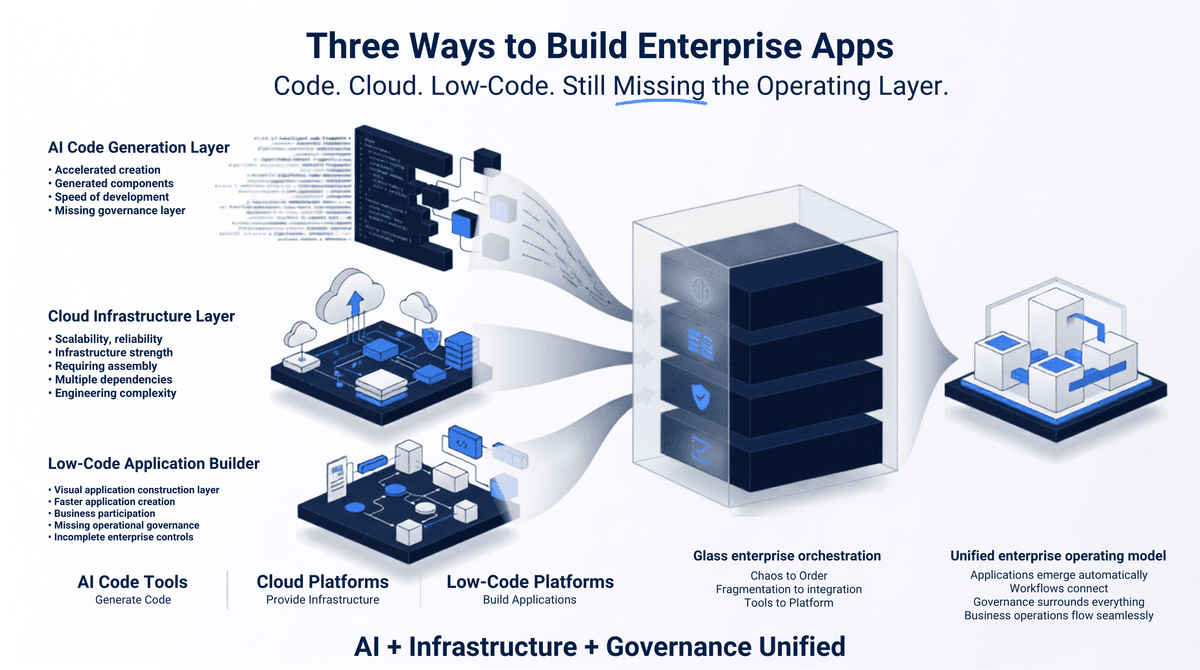
We don’t mean just any platform that positions itself as LCNC (low-code, no-code). For an LCNC platform to be worth a CIO’s attention, it has to overcome the limitations of low-code and no-code respectively.
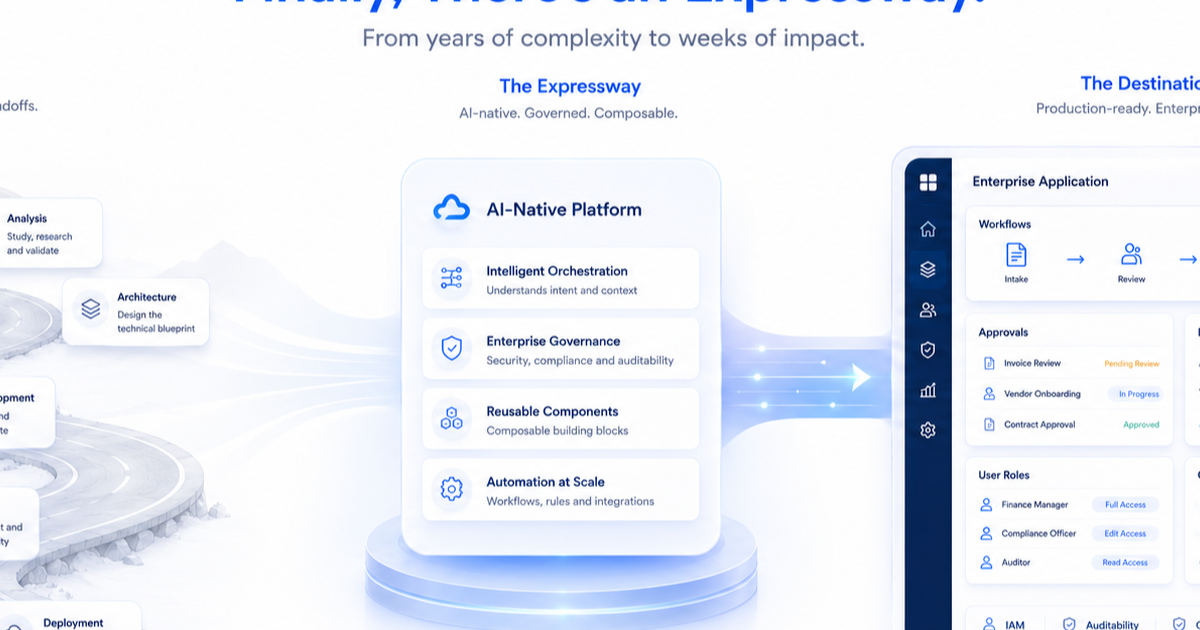
It has to make low-code simple. It has to make no-code powerful. That is what we had in mind when we built Amoga.
Also read: “Low-Code is a gimmick”. Ok, let’s unpack this.
What Makes Amoga Different
Modern low-code/no-code platforms like Amoga aren’t just another tool in your tech stack. They represent a fundamental shift in how enterprise IT delivers value:
- Speed Without Compromise: Deliver enterprise-grade applications 10x faster and reduce costs by up to 75%. This is not a tall claim. This is what we have seen happen to our clients. There’s nothing better than simply challenging us to do a proof of concept for you. Ask for a no-obligations conversationhere.
- Bridge the Skills Gap: Your experienced IT leaders can leverage their deep business understanding while your younger talent brings modern technical skills. Amoga’s combination of no-code simplicity and low-code flexibility means everyone contributes at their best level.
- Enterprise-Ready From Day One: We understand your concerns about security and scalability. That’s why Amoga comes with enterprise-grade security features like SSO, OAuth 2.0, and MFA built-in, plus the reliability of microservice-based architecture.
- Complete Digital Transformation: From CRM to ERP, from workflow automation to business intelligence – build a complete digital ecosystem with Amoga. No more silos, no more rigid systems.
Most importantly, this isn’t another technological dead-end. Unlike traditional development approaches that leave you facing the same challenges years later, this is a platform for continuous evolution. Your team can focus on innovation rather than maintenance, on strategy rather than firefighting.
A Call to CIOs: Adapt or Lose
The water is getting warmer. But unlike the proverbial frog, you have a clear path to safety. The question is: are you ready to take it?