Agentic enterprise software Field note
Claude 4.6 and the Move Toward Lean Enterprise Systems
Claude 4.6 for enterprise apps brings 1M-token context, stronger consistency, and lower-cost reasoning. Here's why structured GenAI platforms matter more now.
In this article 0 sections
Most of what enterprises have seen AI do so far has happened at the edges: write a function, summarize a document, or speed up a prototype.
Claude 4.6 changes the scale of what is possible. Claude 4.6 for enterprise apps brings a one-million-token context window, stronger long-horizon consistency, and much lower cost than Anthropic's flagship tier, so it can work across entire systems instead of isolated snippets.
That matters because enterprise software is never just code. It is policy, approvals, workflows, roles, data models, documents, and downstream dependencies that all need to keep moving together.
So the shift is not simply that AI got better at writing code. It is that AI can now understand a larger operational picture in one sitting, and that opens the door to leaner enterprise systems.
Also read: How a COO Can Turn a Process into an App in a Week with GenAI Low-Code
What Claude 4.6 Actually Changes for Enterprise Teams
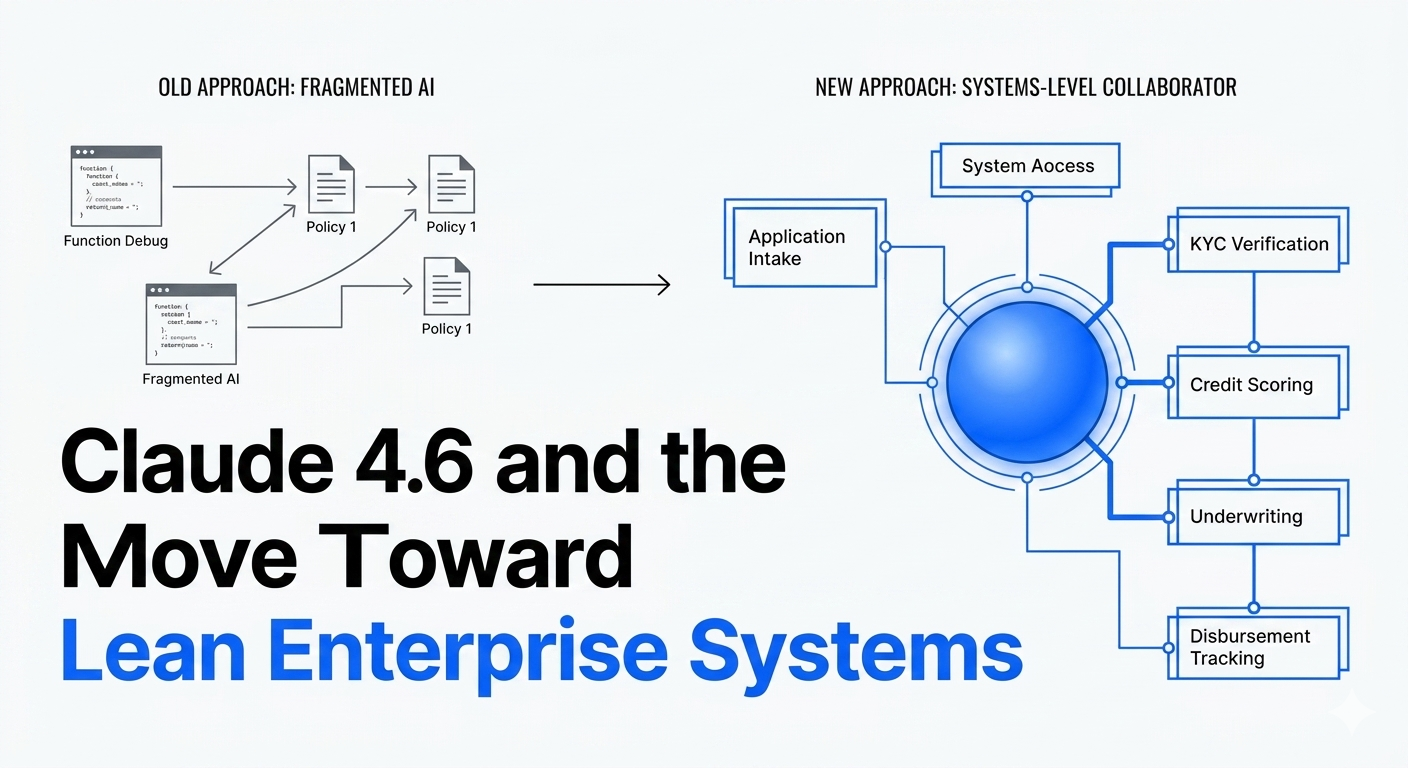
Until recently, AI mostly helped developers at the task level. It could assist with an endpoint, a refactor, or a bug. But the person building the system still had to hold the wider context in their head: the upstream workflow, the downstream dependencies, the governance rules, and the operational exceptions buried in separate documents.
Claude 4.6 changes that working model. A CTO or enterprise architect can now give AI a much larger operating picture: workflow documentation, existing schemas, process notes, and implementation context, all in a single session.
That means the model can contribute as a systems-level collaborator rather than a code-completion tool. It can reason across the full process, spot duplication, preserve shared logic, and stay consistent through multi-step work in a way that feels much closer to enterprise execution than earlier tooling.
Why Faster Code Is Only Half the Story
The real cost of enterprise software is rarely the first build. It is the next change, and the one after that.
Every quarter brings new approvals, revised policies, additional integrations, and process exceptions. AI has absolutely reduced the cost of generating code for the first version. But every line of custom logic still adds surface area that someone has to understand, test, govern, and update later.
That is the part teams often skip past when they celebrate AI coding velocity. Code may now be cheaper to produce, but maintenance is not free. In fact, moving faster without structure can make the maintenance burden arrive sooner.
Also read: How GenAI Low-Code No-Code Platforms Help Enterprises Reduce Technical Debt
From Writing Code to Designing Systems
The better question for enterprise teams is not "How do we get AI to generate more code?" It is "How do we use AI to build systems that stay easy to change?"
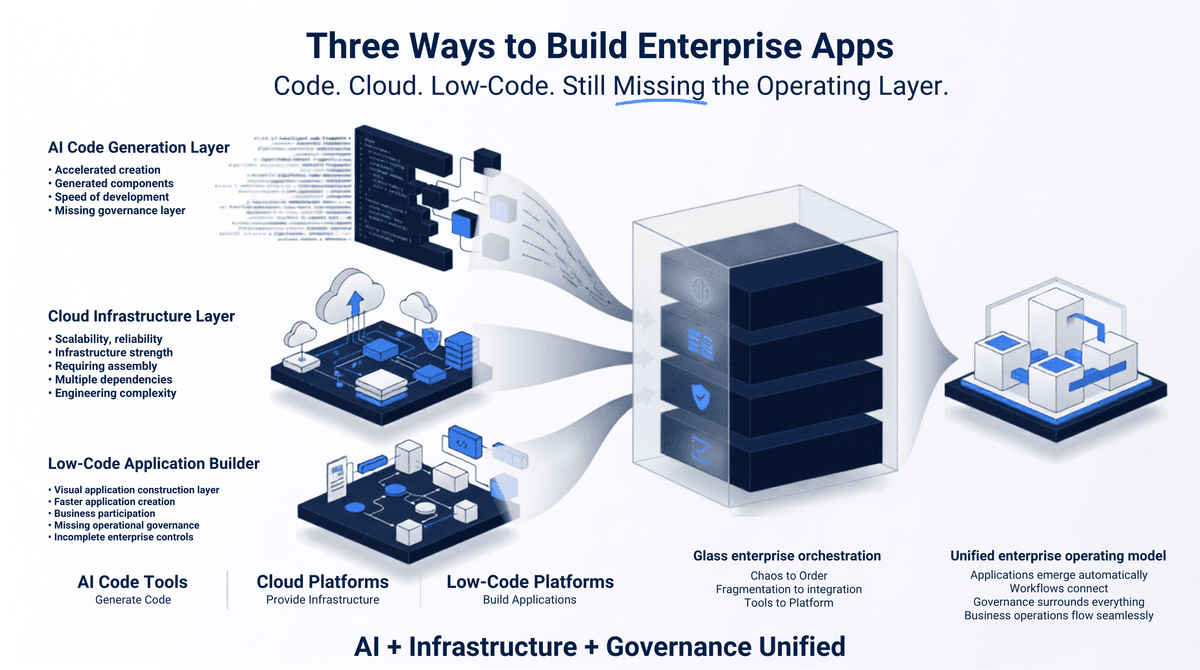
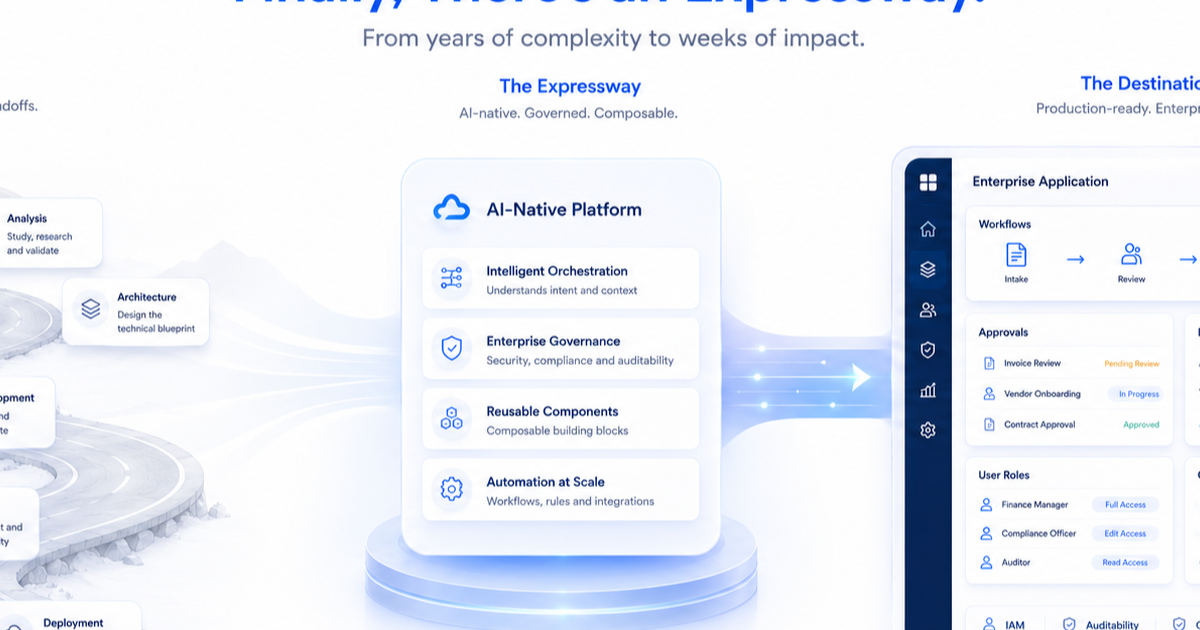
That is where structured GenAI low-code no-code platforms become much more important. Instead of creating custom scripts for every workflow step, they let teams define configurable logic. Instead of hardcoding roles, permissions, and controls after the fact, they make those part of the system from day one. Instead of leaving governance to a later cleanup phase, they build it into the operating model.
In practice, that means the AI output shifts from raw code toward structured assets: workflows, data models, approval paths, access rules, automations, and UI layers that can evolve without a rewrite every time the business changes.
This is why the move toward lean enterprise systems matters. The smartest systems are not the ones with the most generated code. They are the ones that need the least custom code to change.
Also read: How GenAI Speeds Up Low-Code Development
Where Claude 4.6 Fits into Enterprise App Building
Claude 4.6 is powerful because it understands business intent, handles large bodies of context, and maintains consistency across long tasks. Those are exactly the strengths enterprise application development needs, and they explain why Claude 4.6 for enterprise apps is becoming a much more practical conversation inside operations and IT teams.
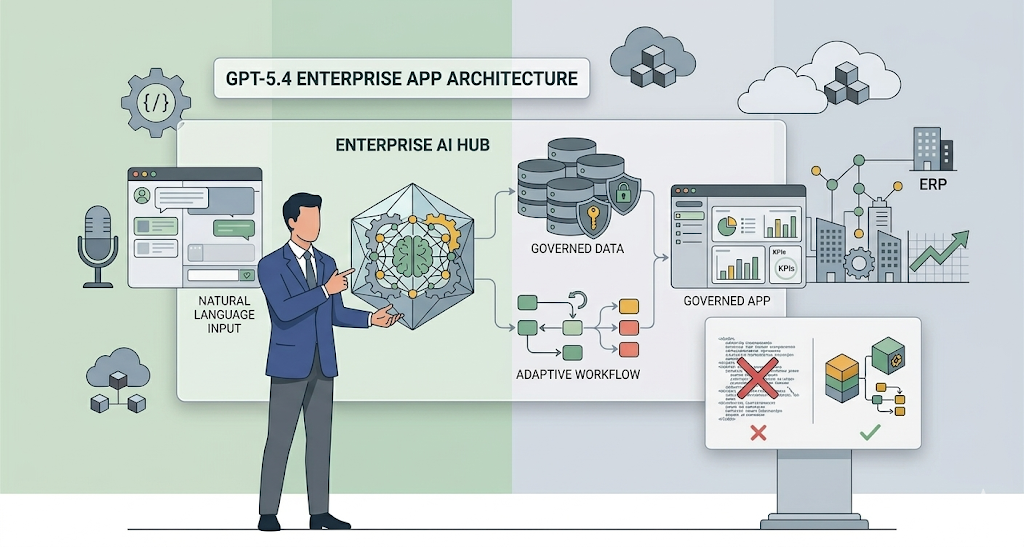
But those strengths create the most value when they operate inside a structured platform. That is where AI can turn process descriptions into governed applications instead of simply producing a growing pile of code files.
At Amoga, that is the direction we are building toward. Our GenAI low-code no-code platform turns business requirements into complete application blueprints with workflows, UI pages, data models, automations, and governance layers built in from day one.
If you want to see how that delivery model works in practice, explore how Amoga works and how enterprise teams move from business intent to deployed systems much faster without sacrificing operational structure.
What Matters Next
The enterprise AI conversation has already moved beyond "Can AI code?" It can, and Claude 4.6 makes that even more obvious.
The more important question now is how to use that capability so the systems built this quarter do not become the maintenance burden of the next two years. Lean enterprise systems come from pairing intelligence with structure, speed with governance, and flexibility with an operating model that can absorb change.
Claude 4.6 brings the intelligence. The right platform makes sure what you build stays manageable.
Request an enterprise demo to see how Amoga helps teams convert AI-driven intent into governed enterprise applications.