Applications & operations Perspective
Conquer Customer Chaos: How Low-Code CRMs Deliver Seamless Omnichannel Sales
All customers are different, apart from just one thing. Every customer hates getting stuck during the product search and buy process. But still, for low-code.

In this article 0 sections
All customers are different, apart from one thing. Every customer hates getting stuck during the product ‘search and buy’ process. But still, for most customers, the product search and purchase journey is jittery at best. There’s a reason for this.
Customers have no reason to stick to a linear process. For instance, here’s a very realistic scenario:
- Shopper sees Facebook ads on their smartphone
- They visit the retailer’s website and browse products
- They get a sign-up discount code on their email
- They head back to the website and initiate a live chat with an agent to ask for info not listed on the product page
- They get their answers but vow to visit the retailer’s physical store the next day to see the product before they buy
- They go to the store and speak with the sales rep on the floor
- The sales rep informs them that the product is out of stock but promises to call back the next day with an update on when it’ll be back in stock
At every stage of this journey, there’s a risk of losing the sale-for reasons beyond the retailer’s control. The only way to stay in control? A robust CRM software that can seamlessly push the lead to the next stage, across every channel, without friction.
With this guide, we aim to answer some difficult but important questions about making and customer-friendly, such as:
✅ Why does switching between online and offline shopping feel broken?✅ What should a do to prevent customer drop-offs?✅ How can businesses track customer interactions without losing context?✅ What’s the difference between ?✅ Can businesses avoid complex custom development and still get a tailored CRM?✅ How does help create a better CRM experience?
By the end of this guide, you’ll have a clear roadmap to solving these issues-with the right tools, the right CRM, and the right approach.
Also read: Fix Your Broken Sales Processes with a Low-Code CRM
The relevance of omnichannel CRM
It’s easy to see why an omnichannel CRM software for sales is valuable. But why do even the world’s best companies fail to make omnichannel work? Many CRM solutions claim to support omnichannel selling, yet fall short. Startups, SMBs, and enterprises all face the same challenge:
How can they ensure a truly seamless product search and purchase journey?
This immediately poses some related questions:
- What is omnichannel sales
- Why do so many CRMs fail at delivering it
- How can you overcome this problem?
Let’s tackle these, one by one.
What exactly is omnichannel sales?
Let’s take a closer look at what true omnichannel sales involve. Imagine a customer, Alex.
- Alex wants to buy a new coffee table and sees a great one on a furniture retailer’s website, but he has questions about dimensions and materials. He starts a live chat on the move to get quick answers. A well-integrated CRM software ensures that this interaction is tracked.
- Later, when Alex visits the furniture retailer’s physical store to see the piece in person, the staff already knows about the live chat conversation. Staff knows that the item in question is not stocked in the store But they can easily persuade Alex to consider something very similar. Alex finds the perfect coffee table and buys it in-store. With a robust CRM software for sales, in-store reps can instantly access previous customer interactions,
- Soon after Alex gets home, he gets an email (with details of delivery time for the coffee table). A smart CRM system doesn’t just track sales-it ensures smooth follow-ups, reducing friction in the buyer’s journey.
- The next day, Alex knows he can’t be at home during the scheduled delivery slot, so he goes to the live chat and requests the delivery to be rescheduled 4 hours later. The sales team continues the conversation without missing a beat. The delivery happens successfully.
Later, Alex receives a link on his WhatsApp, to leave a public review for the retailer (because the knows from past interactions that Alex has ignored ‘requests for review’ on email but responded when asked on WhatsApp). Alex leaves a 5-star review.
This seamless integration across websites, live chat, in-store, email, and WhatsApp, where every interaction builds on the last without any repetition or delay, exemplifies omnichannel sales. The idea is that the customer journey continues uninterrupted across multiple platforms. The result is obvious – the customer will stay on track to complete the sale, in spite of countless cracks in the track. Technically speaking, a CRM to be the backbone of omnichannel. It gathers all customer interactions into one central place.
But here’s the problem: many CRMs simply record your email, phone call, maybe a chat transcript…and that’s it. That’s multichannel, not truly omnichannel. While multichannel is better than nothing, it still leaves gaps.
When the customer is open to considering alternatives to your products, you can’t afford these gaps. A fragmented CRM experience weakens engagement, making it harder to convert interest into sales. The customer has no motivation or drive to complete the sale; it’s the job of the sales rep, but multichannel means they will only have a hazy version of truth to act on.
This leaves us guessing: what’s the problem?
Also read: Why EdTech Companies Need a Low-Code CRM
Why do so many CRMs fail at omnichannel sales?
So, why can’t most CRMs support omnichannel sales? Honestly, it’s often because businesses fall into a trap.
- They see what everyone else is doing.
- They buy a popular CRM.
- They try to cram their processes into it.
This is backwards! Many decision-makers lack the time or tech expertise to define their exact needs. This is the first point of failure, which eventually leads to half-baked solutions that leave customers frustrated and staff tied in knots.
Even the most feature-packed CRM software for sales won’t deliver results if it doesn’t align with business workflows.
Forget the rat race. True omnichannel success means ditching this mindset and the right tools… tools that can shape customer journey. So, a CTO shouldn’t bother about the features of a CRM software. Instead, they must think of first principles. They must enlist some sharp, non-negotiable asks for CRM vendors to fulfill (or, to forget about the sale).
Here are some first-principle questions to get you started:
- Can a customer seamlessly switch channels without losing progress?
- Can sales reps instantly access the full customer interaction history?
- Does the integrate with all our key communication tools (email, SMS, social, etc.) now, and will it evolve with how customer preferences evolve?
- Does it offer options without compromising essential functionality?
The CRM software you choose will determine whether you can capture leads from all possible channels and then keep nudging them onto the next steps in the sales process until they complete the sale. So, being 100% sure of what you want is crucial. Investing in affordable CRM software doesn’t mean settling for less-it means selecting a scalable solution that grows with your business.
Remember, each change you make to streamline your process has a snowball effect. A small digital tweak today can save countless hours in the future.
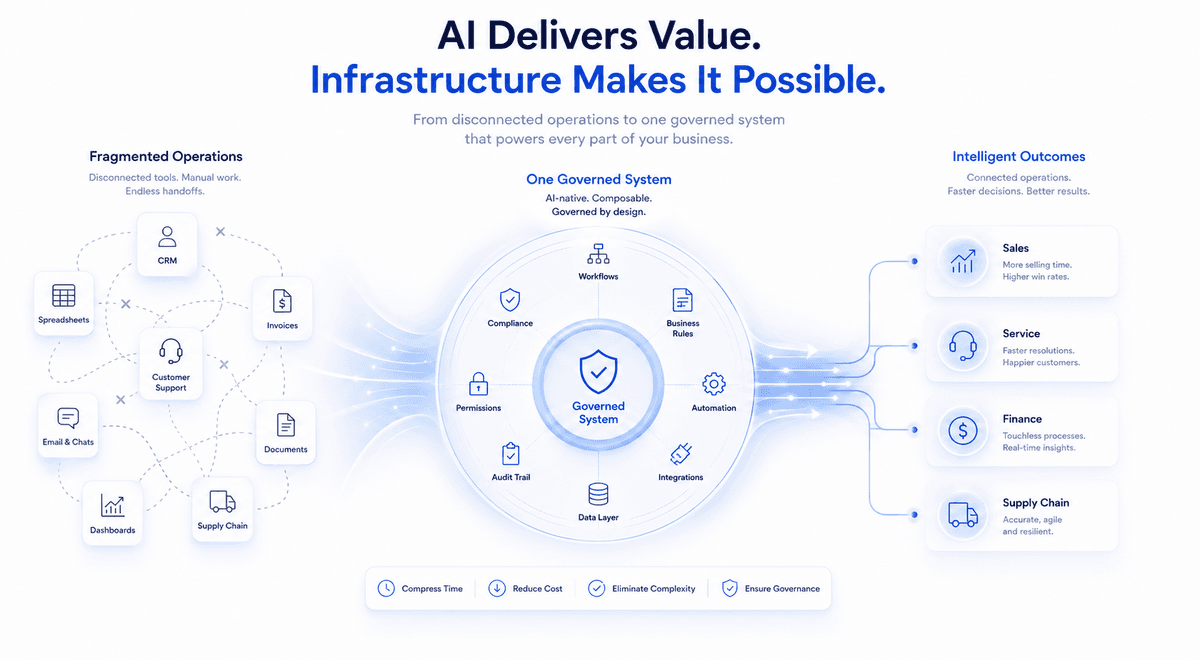
So, the question isn’t whether your CRM be omnichannel, but rather does it let you build it around business, not the other way around? Is there a way to have this flexibility without needing an army of programmers? Turns out, the answer is yes – and it lies in the power of Low-Code.
What is low code and how does it help?
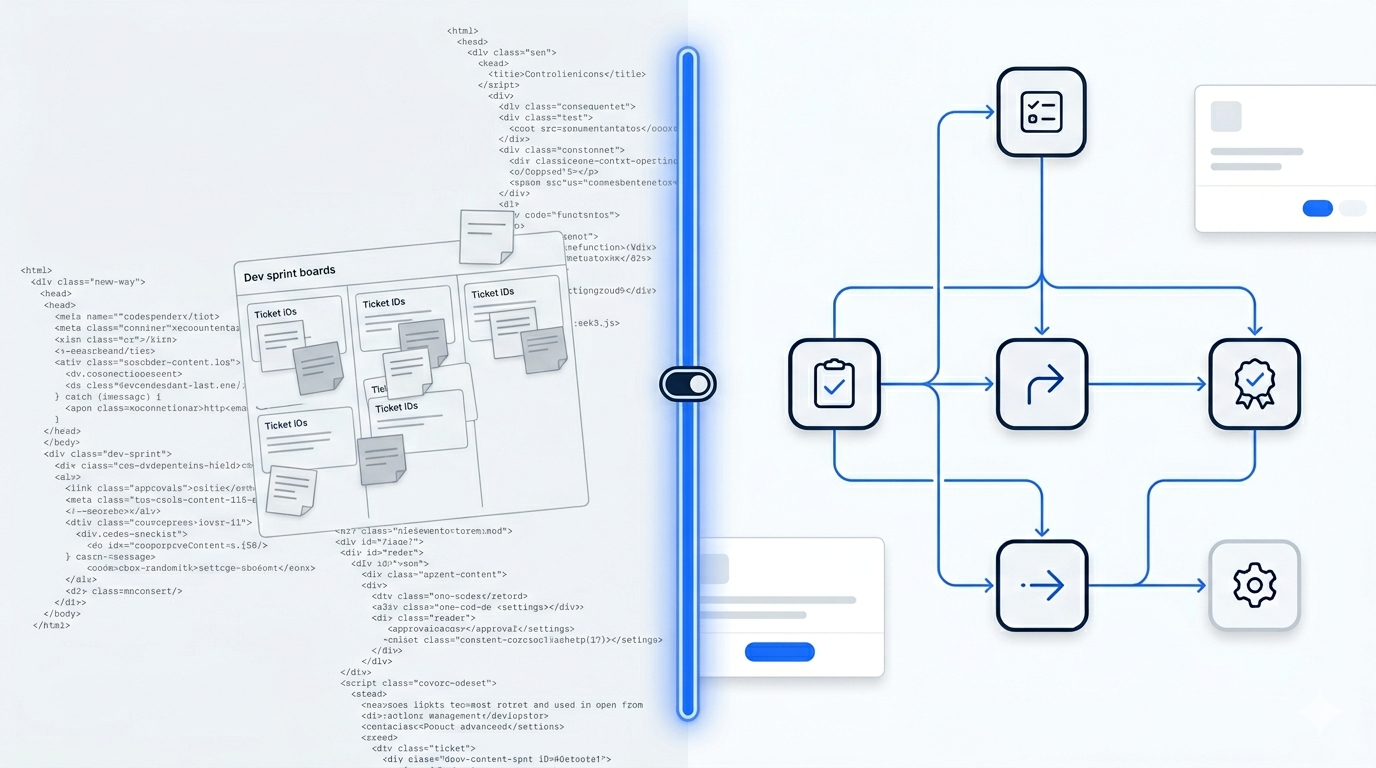
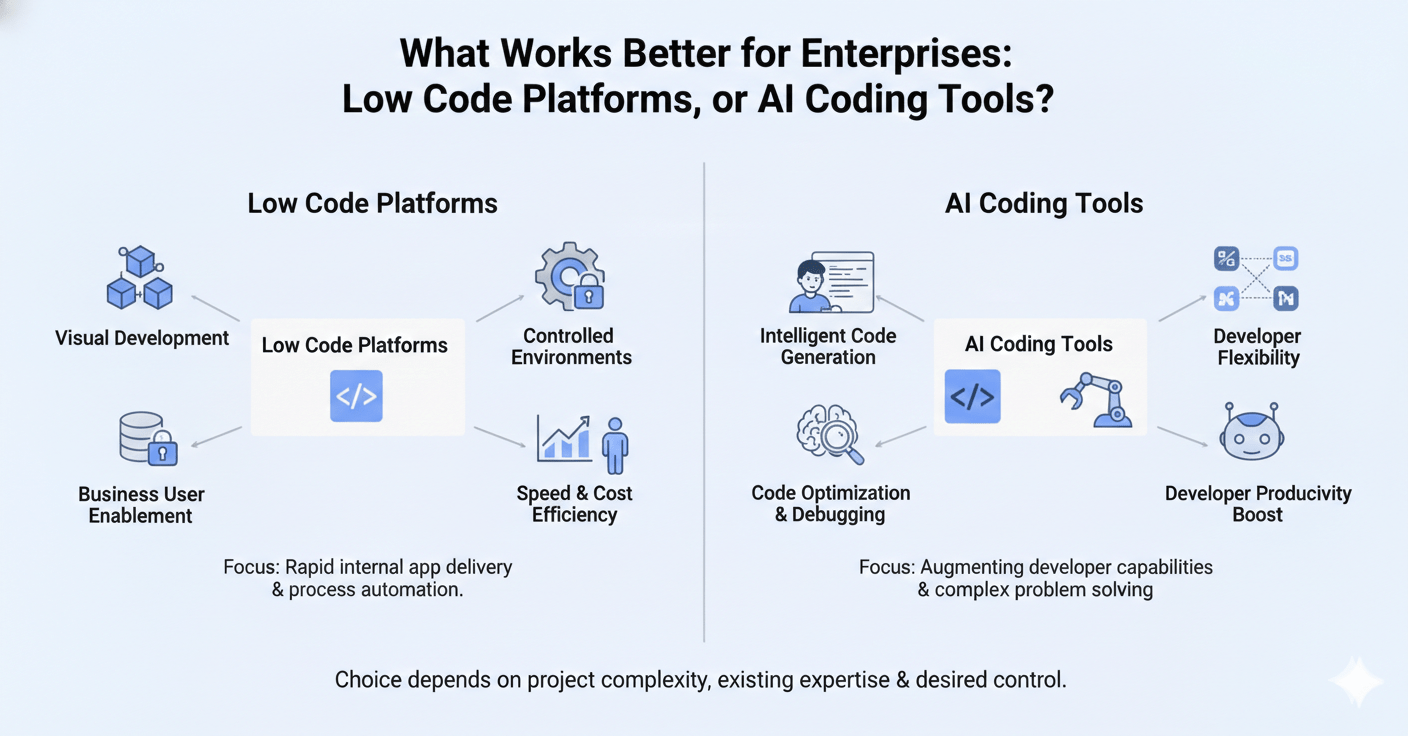
Low-code is a development approach that includes several key components: configurability, visual interfaces, drag-and-drop functionality, reusable components, and rapid testing and deployment capabilities.
What does this mean for you? Firstly, anyone in your team can configure a low-code CRM to build workflows that reflect real-world operations-no coding expertise is needed. This is particularly beneficial for businesses that want to customize their CRM without heavy investment in CRM software development. This cuts down the need for a large IT team and shifts the focus from coding everything from scratch to simply connecting what’s necessary.
With low-code CRM software, you’re free to think about what you want your sales process to look like. Where do customers reach out to you? What kind of flow do you want to create across all touchpoints? You can set up your CRM to handle all this with ease. Adding a feature that might typically take 20 days and a budget of $1000 with traditional development or customisation can now be accomplished in just 2 days for much less cost.
The essence of omnichannel is that the customer decides when, where, and how they interact with your business, and these preferences will evolve. Your CRM software should adapt at the same pace. It should have the power to initiate contact, using the most relevant channel, when the customer needs constant nudging to progress through the sales funnel.
Low-code CRMs are built to be as dynamic as your customer interactions. That’s the power of Low-Code: It lets you focus on lead acquisition and sales, not wrestling with technology. Need to add a new communication channel? A few tweaks, and it’s done. This means your CRM can change as fast as your customers do, which is absolutely crucial for true omnichannel sales.
Sounds great, right? But which low-code CRM software is right for building this kind of journey? That’s where Amoga enters the picture…
Why is Amoga the right CRM for you?
Amoga Sales CRM is built for the needs of today’s businesses. With true low-code, Amoga lets your team engage with leads across email, social media, phone, and even WhatsApp. With its omnichannel focus, no conversation gets lost in the shuffle.
Unlike many other CRM software options, which require extensive customization, Amoga simplifies the process with an intuitive low-code interface.
Need specific workflows or new features? Amoga’s visual interface lets anyone on your team configure workflows without a line of code. This makes it an ideal CRM software for sales teams that need agility and efficiency. This also means you can adapt to customer needs at lightning speed. Plus, pre-built templates for common sales workflows get you started instantly.
Imagine reducing your time to launch new features by 90% and cutting development costs by 75%. That’s the power of Amoga. It puts business needs first and automates the mundane, so your team can focus on what deserves their energies.
Frequently Asked Questions – Low-code CRM
What is a Low-Code CRM and how does it work?
Low-code CRM software allows businesses to build and customize their CRM system with minimal coding. Users can use a drag-and-drop interface, automation tools, and pre-built components to quickly build workflows and keep the CRM aligned with the current state of the business needs.
How does Low-Code CRM software help businesses develop apps faster?
Low-code CRM software can help businesses develop apps faster because it reduces manual coding. In this way, a low-code CRM development platform can accelerate the creation of custom CRM applications.
What are the key benefits of using a Low-Code CRM?
Low-code CRM software helps a business streamline sales, customer support, and automate processes. It reduces dependency on IT and lowers development costs. Additionally, a business can integrate multiple communication channels and allow quick modifications to the CRM without the need for expensive, deep technical expertise.