Applications & operations Guide
Change App Workflow Without Writing New Code
Most internal apps start as simple workflows but become full engineering projects. Learn how GenAI low-code no-code platforms fix this.
In this article 0 sections
Most internal apps are tools to remove everyday friction.
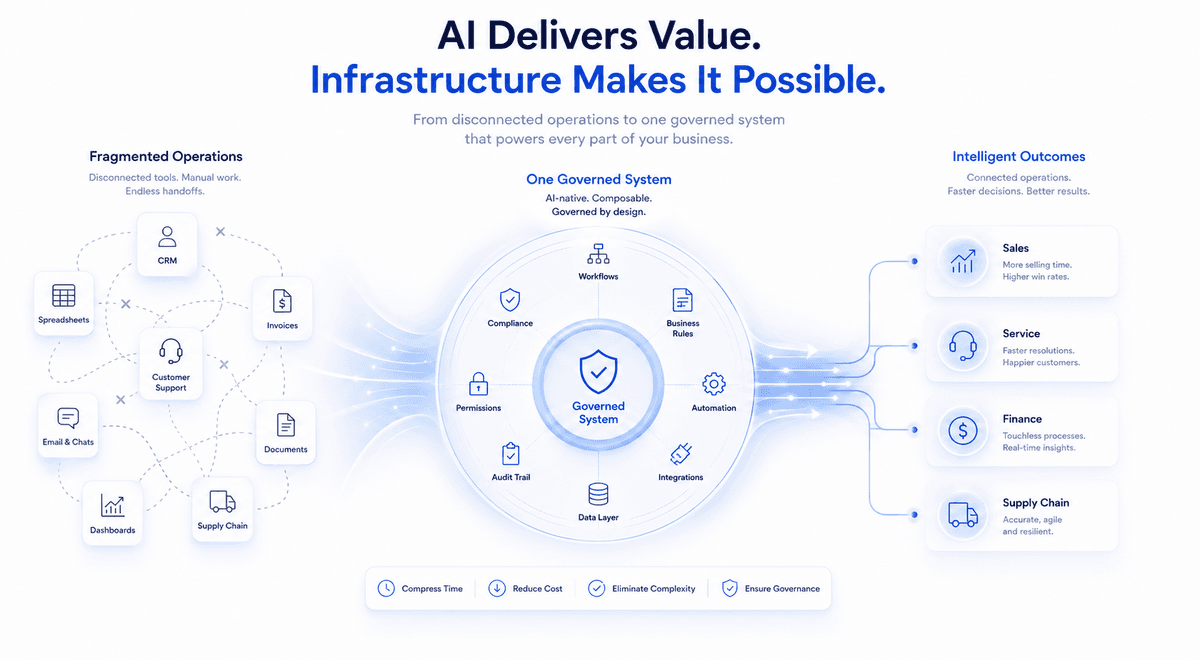
Think about what actually runs inside a company. Approvals that sit in someone's inbox for two days. Purchase requests that need three sign-offs but have no clear routing. Inspection checklists living in spreadsheets. Onboarding tasks split across HR, IT, and the hiring manager with no single view of what is done and what is pending.
These are not complex problems. They are simple, repetitive, operational workflows, and every company has dozens of them. Every company needs them digitized.
That is where GenAI low-code no-code platforms change the operating model: they turn business intent into configurable systems instead of another custom-code backlog item.
The question is how?
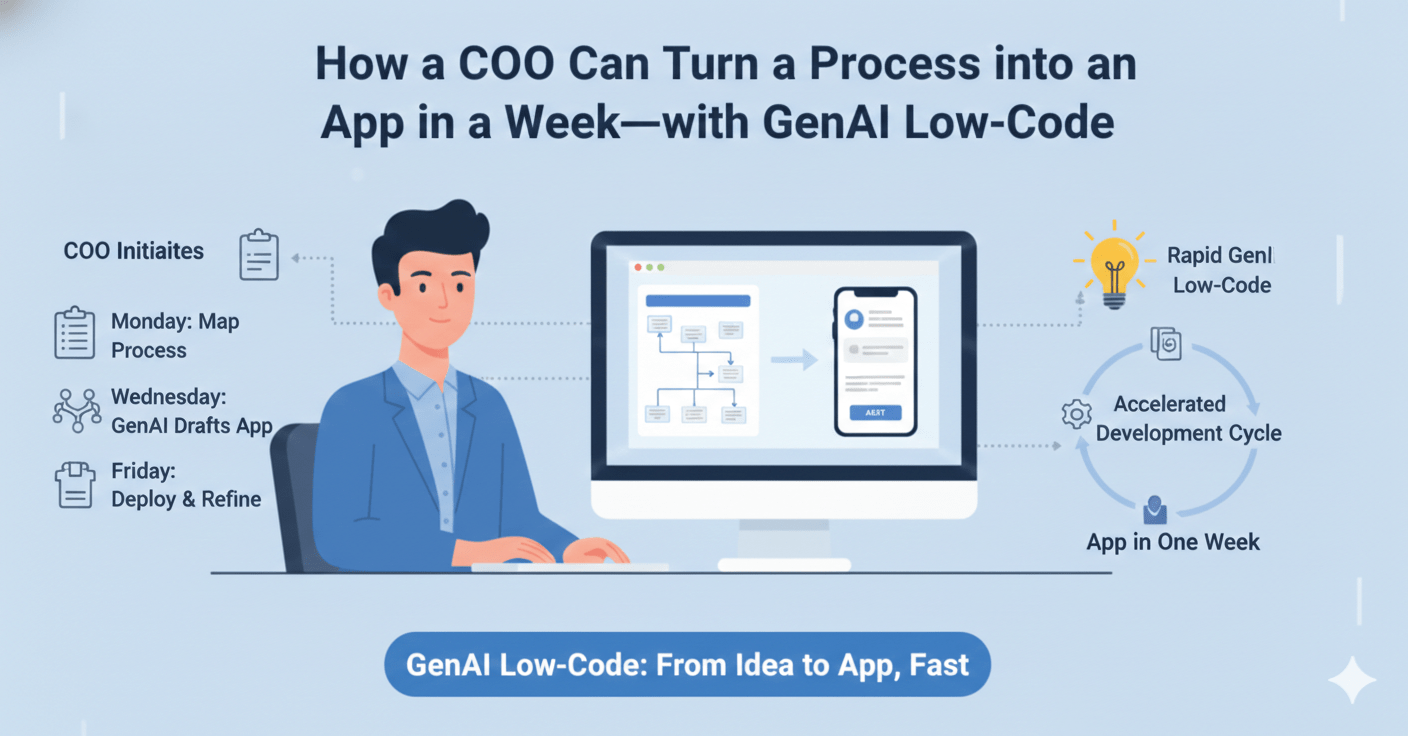
Also read: How a COO Can Turn a Process into an App in a Week with GenAI Low-Code
The Default Approach: Treat Every Workflow Like a Software Project
The default answer, in most enterprises, is to treat each workflow like a full engineering effort.
A team needs to digitize an approval flow. The request goes to engineering. A backlog is created. Sprints get planned. Custom scripts are written. Backend logic gets built. Integrations get scoped.
Three months later, a simple three-step approval has become a complete software project with custom role-based access built from scratch, email notifications wired manually, and a deployment pipeline just to go live.
Every future change, such as a new approval level, a different routing rule, or a compliance update, goes back to the same engineering queue. The operations team, which is supposed to move fast and adapt, now moves at the speed of development sprints.
To automate a simple workflow, companies end up building complex software. Or worse, no software at all.
And that is where the real cost begins.
Also read: How GenAI Low-Code No-Code Platforms Help Enterprises Reduce Technical Debt
The Real Cost Is Every Change After the First Build
Building the first version is rarely the problem. The problem is what happens when something changes.
Each change means new code, new testing, and new deployment. Multiply that across dozens of internal tools and the drag becomes enormous.
Here is what the data shows:
| What is being measured | What the data says |
|---|---|
| IT budget spent on maintenance | Up to 70% of enterprise IT budgets go toward maintaining existing systems instead of building new ones. |
| Developer time lost to tech debt | The Stripe Developer Coefficient report found developers spend more than 17 hours a week on maintenance, technical debt, and bad code. |
| AI-generated code and maintenance | GitClear's AI code quality research found a sharp rise in copy-pasted code across 211 million changed lines. |
That last point is worth pausing on.
There is a common assumption that AI-powered code generation solves this problem. It does not, at least not by itself.
AI makes building faster. But speed without a system creates a new kind of maintenance problem. Google's 2024 DORA report found that higher AI adoption was associated with lower delivery stability, which is a useful reminder that faster code generation is not the same as easier system change.
Also read: How GenAI Speeds Up Low-Code Development
The Core Problem: Code-Dependent Operations Do Not Scale
Operations are, by nature, dynamic.
Rules change. Team structures shift. Compliance requirements update quarterly. A new region gets added. A process that worked last year does not fit this year.
This is normal. Operations are supposed to evolve.
But code does not evolve the same way.
Code is rigid. It is expensive to modify. It accumulates debt over time as every patch, workaround, and quick fix adds weight to the system.
There is a fundamental mismatch here:
- Operations are rule-driven, repetitive, and constantly changing.
- Code is static, expensive to update, and creates dependency.
When every workflow change requires a developer to write, test, and deploy, the system becomes the bottleneck. The people who run operations cannot move without the people who write the code.
I have seen teams where adding one approver to a chain takes two weeks because it has to go through development, QA, staging, and production. For one approver.
If your workflow needs code every time it changes, it is not designed for operations.
There is a better way to think about this.
The Better Way: GenAI Inside a Structured System
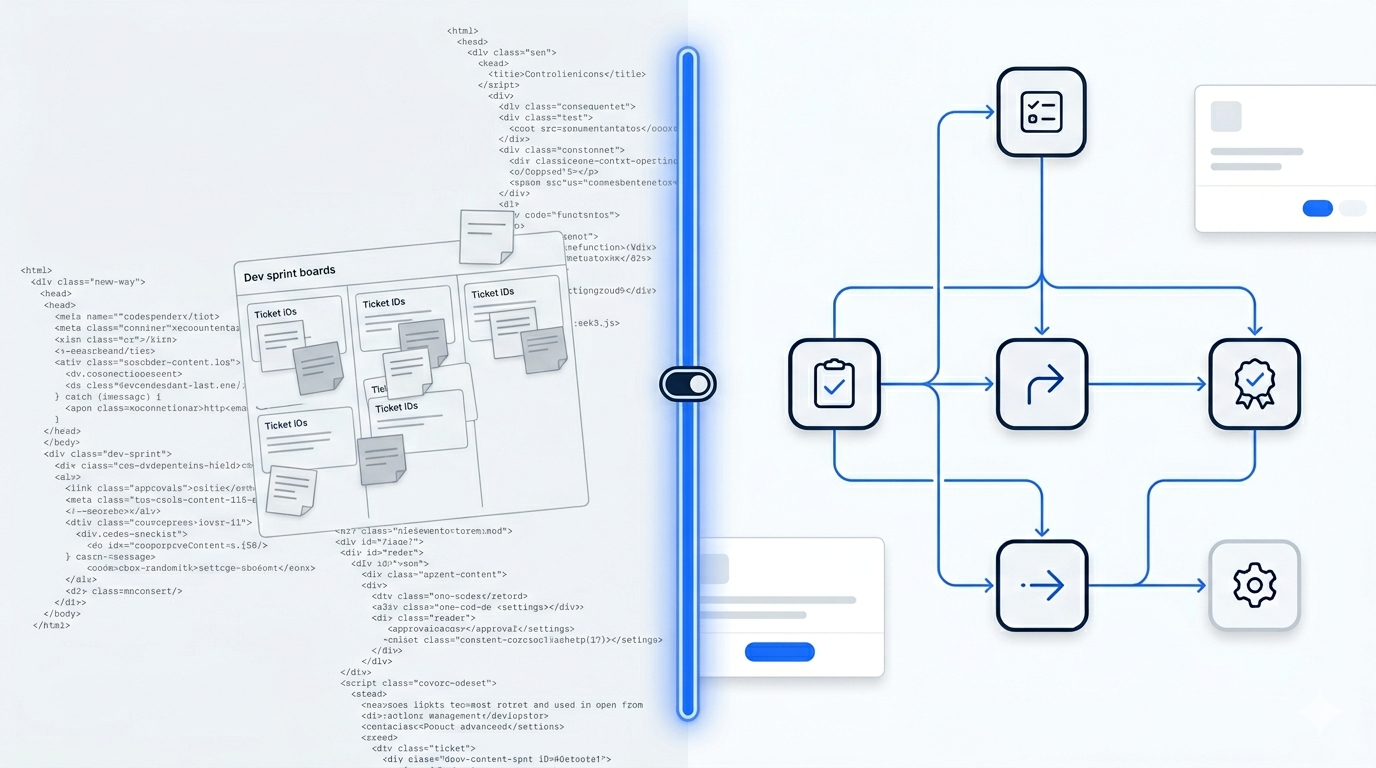
The best-run operations teams do not rely on developers for every workflow change. They use systems built on structure: reusable workflows, configurable business rules, role-based access, and structured data models.
The shift is already happening at scale. Gartner projects that by 2026, 70% of new enterprise applications will be built using low-code no-code technologies. Forrester has found these platforms can make development up to 10x faster with 70% fewer resources.
But the real advantage is not build speed. It is change speed.
Need to add an approval level? Configure it. Need to change a routing rule? Update it. Need to roll out a new inspection form for a different region? Duplicate and modify.
No tickets. No sprints. No waiting.
The best operations systems do not need developers for every change. They need structure that can adapt. This is exactly why we built Amoga.
How Amoga Turns Business Processes Into Structured Systems
Amoga is a GenAI low-code no-code platform built for exactly this kind of problem.
Here is how it works in plain terms: you describe your business process in natural language. Amoga's AI engine takes that description and generates a complete working system:
- Data models
- UI pages
- Workflow logic
- Role-based access
- Backend automation
All structured. All configurable. All changeable, without rewriting code.
What used to take months of engineering now takes hours. More importantly, when the process changes, the system adapts without going back to a development queue.
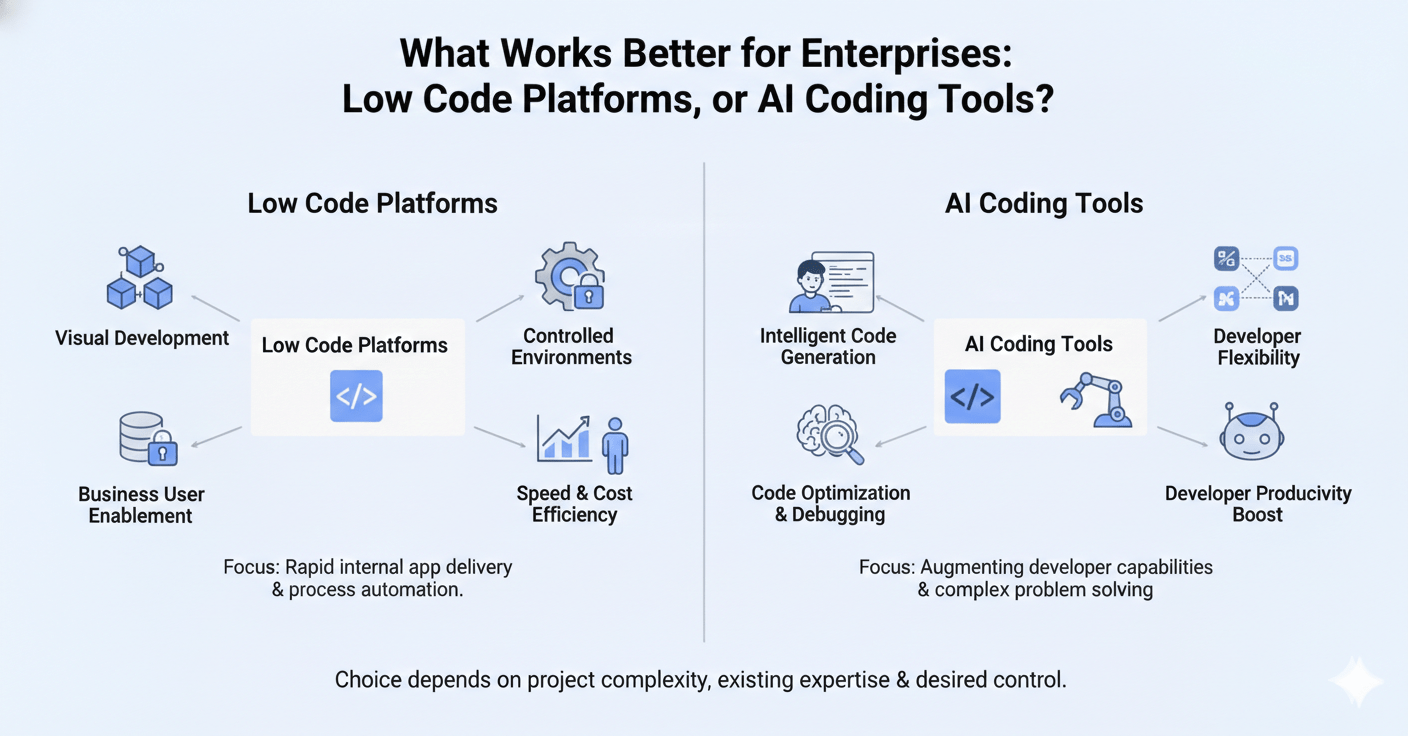
This is the core difference between low-code no-code with AI that only generates code faster and a platform that generates structure. Code-generation tools give you speed on day one. But when the business changes on day ninety, you are back to editing scripts and managing deployments.
Amoga's architecture is designed so applications evolve with the platform. We call it Zero Tech Debt Architecture. That means every app built on Amoga stays current as the platform improves, without manual upgrades.
Enterprises across BFSI, healthcare, manufacturing, and internet-scale operations run mission-critical workflows on Amoga because Amoga is not a code generator. It is a system builder.
AI helps you build faster. Amoga helps you build systems that do not slow you down later.
Book your personalized demo now and see Amoga in action.
Related Resources
Explore the Amoga platform to see how structured enterprise apps are built, or visit How It Works for the full GenAI low-code workflow.