Applications & operations Perspective
Everything You Need to Know About Enterprise Resource Planning
Key Highlights Enterprise resource planning (ERP) systems are software tools that help manage and integrate main business processes. They provide a everything need.

In this article 0 sections
Key Highlights
Enterprise resource planning (ERP) systems are software tools that help manage and integrate main business processes. They provide a central database for all information.
Today’s ERP systems use the cloud. This offers more scalability, flexibility, and cost savings compared to older on-premise systems.
Important features of modern ERP include real-time data analysis, the ability to connect with other business tools, automation, and advanced analytics.
To choose the right ERP, you need to know your specific business needs. You should also look at different vendors, understand the costs to implement, and make sure your data is secure.
A successful ERP implementation needs good planning and change management. It also requires employee training and support to keep the system working well and to adapt to new trends.
Introduction
Enterprise resource planning, or ERP, has changed a lot over the years. We started with simple material requirements planning. Now, we have modern ERP software systems that are very advanced and essential for large enterprises. Today’s businesses can use these complete software solutions to make their operations smoother. These systems connect different business functions. They also create a central place to manage resources, information, and processes.
Understanding ERP Systems
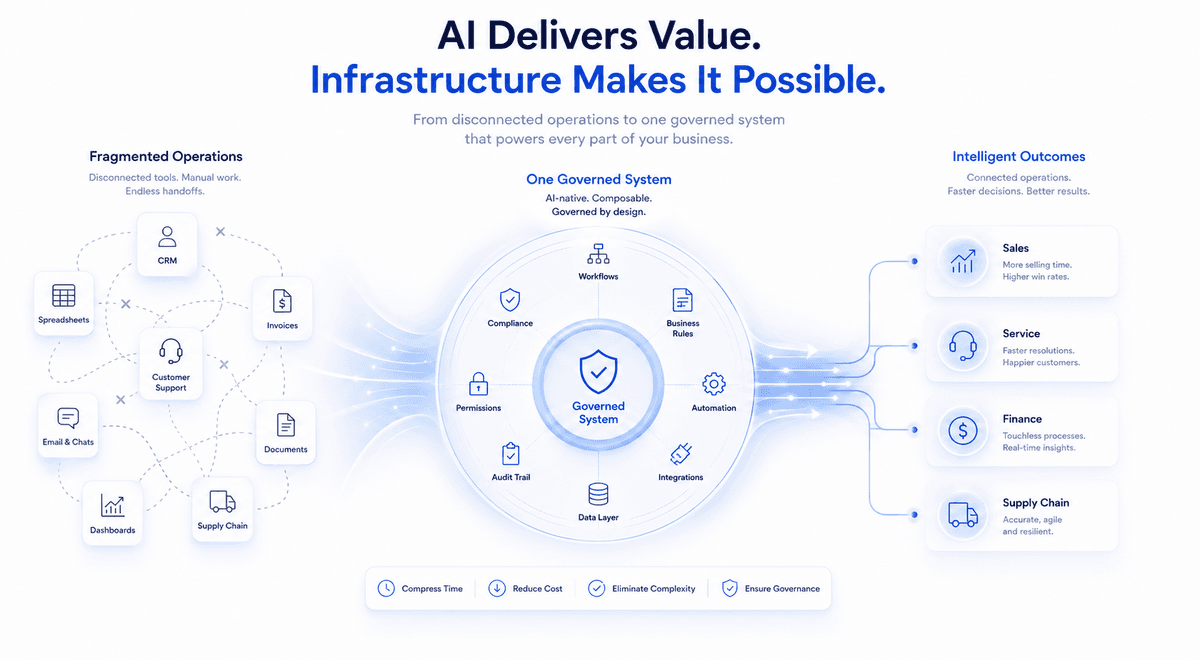
At its heart, an ERP system brings together all the resources needed to run a business well with a single source of truth. This includes things like finances, human resources, inventory, the supply chain, and customer relationship management. By keeping data and processes in one place, an ERP system helps to eliminate data duplication and break down barriers between departments. This gives a clear view of business operations.
Think about having one system, like Oracle NetSuite, that can track every purchase order, handle employee payroll, keep an eye on inventory levels, and create financial reports. All this happens in real-time and is easy to reach from one central database. This shows the power of an ERP system.
The Evolution of ERP in India: From Legacy Systems to Modern Solutions
Legacy ERP systems were often difficult to use and stored on-site. They created challenges for Indian businesses. These systems were costly to maintain. They were also inflexible and could not keep up with fast technology changes.
In recent years, there has been a big change with new ERP solutions. SaaS ERP, or cloud-based ERP, is a game changer. It offers businesses more room to grow, costs less, and is easy to access for all sizes of businesses.
Today, Indian businesses are adopting modern ERP. They do this to improve efficiency, make better decisions, and strengthen their competitive position in the world market.
Core Components of ERP: What Makes Up an ERP System?
ERP systems can be simple or complex, but they usually include some key parts. These parts are modules for financials, human resources, supply chain management, and customer relationship management.
The financial modules take care of tasks like accounting, budgeting, financial reporting, and risk management. Human resource modules help with HR tasks such as payroll, benefits, recruitment, and talent management.
Supply chain management modules improve inventory control, procurement, and logistics. Lastly, customer relationship management modules help with customer interactions, sales automation, and marketing.
The Significance of ERP for Indian Businesses
In today’s changing business world, Indian companies need to work better, save money, and boost efficiency. ERP software is key to reaching these goals.
ERP systems automate and connect important business tasks. This helps with better financial reporting, improved inventory management, stronger customer relationships, and smoother operations.
Enhancing Efficiency Across Operations
One of the main benefits of ERP is how it makes business operations smoother and easier. This is clear in spots like inventory management and warehouse management order management.
ERP systems show real-time information about inventory levels. This helps businesses keep the right amount of stock, cut back on waste, and prevent running out of items. Order management gets better too, thanks to automated order processing, tracking, and fulfilling orders.
With this complete view and automation, businesses can work faster, save money, and become more efficient in all their operations.
Achieving Scalability and Flexibility in Business Processes
As businesses grow and change, their ERP systems must keep up. This is where cloud ERP is beneficial. The cloud provides great scalability. It allows businesses to adjust their resources quickly based on their changing business needs.
Cloud ERP solutions remove the need for costly hardware and IT setups. This makes it easier for businesses to react to market demands and take advantage of growth chances.
This flexibility is very important for companies in fast-growing markets like India. Here, being quick and adaptable is key.
Key Features of Modern ERP Systems
Modern ERP systems now do more than just traditional software tasks. They use advanced technologies like cloud computing, real-time data analytics, mobile access, and artificial intelligence.
These features help businesses understand their data better. They can automate complicated processes and make quicker, smarter decisions. Real-time dashboards and advanced analytics give a full view of important performance indicators (KPIs).
Integration Capabilities with Other Business Tools
Modern ERP systems do not work alone. They connect easily with other important business tools like CRM, project management software, and e-commerce platforms.
This connection helps information to flow smoothly between systems. It stops data silos and gives a complete view of the business. For instance, when you connect ERP with CRM, it can:
Give sales teams real-time information about inventory levels and order status.
Allow personalized interactions with customers based on their purchase history and preferences.
Simplify the sales process from quote to cash.
These connections break data barriers and make teamwork better. This leads to smarter decisions and improved business results.
Real-Time Data Analysis and Decision Making
In the past, businesses used old data to make choices. This often caused them to react instead of plan. Modern ERP systems are different because they offer data analysis in real time.
With dashboards, custom reports, and advanced analytics, leaders can see important numbers right away. This includes things like money made, sales numbers, stock amounts, and customer actions.
Real-time insights help businesses spot trends early, predict problems, and make choices based on solid data. This way, they can improve their operations and support growth.
Different Types of ERP Deployments
When choosing an ERP technology system, businesses can pick between on-premise, cloud, or hybrid setups. On-premise ERP means the company installs the software on its own servers and manages it themselves. In contrast, cloud ERP is hosted on the vendor’s remote servers and you access it through the internet. Hybrid ERP mixes both on-premise and cloud setups.
On-Premise vs. Cloud-Based ERP: What Suits Indian Businesses?
The choice between on-premise and cloud ERP depends on what a business needs, its budget, and its IT setup. On-premise ERP gives businesses more control over their data and options for customization. However, it needs a large initial investment and ongoing maintenance.
In contrast, cloud ERP uses a subscription model. This means there are cost savings, easy scalability, and better access. This makes cloud ERP appealing to Indian businesses, especially small and medium-sized enterprises (SMEs), that want affordable and flexible solutions.
Also, cloud ERP takes away the need for a team of in-house IT experts. This allows businesses to focus on their main activities.
Hybrid ERP Solutions: Combining the Best of Both Worlds
Hybrid ERP provides a good mix for businesses that want the best from both options. This model lets companies keep important apps on their own site, while they can also use the cloud for other services that need more flexibility and growth.
For instance, a manufacturing company may decide to keep its production planning system on-site. At the same time, it can move its finance, HR, and CRM systems to the cloud.
With hybrid ERP, businesses can adjust their setup to fit their needs. They can move to the cloud in steps and make the most of their current IT investments.
Selecting the Right ERP Solution for Your Business
Choosing the best ERP vendor and solution for your business can be challenging. Begin by carefully looking at your specific needs. Then, match them with the features different ERP systems provide.
Think about things like your industry’s focus, how easily it can grow, how well it works with other systems, the cost, the vendor’s reputation, and the support they offer during setup.
Identifying Business Needs and ERP Functionality
Don’t choose an ERP system without knowing your business needs first. Start by talking to people from different departments. Find out what their needs and challenges are.
Then, compare those needs with what different ERP systems can do. Some ERP solutions may focus on certain industries or provide specific features for particular business tasks.
Talking to independent ERP consultants or service providers can give you helpful insights and assist you in making the right choice.
Vendor Evaluation and Selection Process in India
When you are looking at ERP vendors, think about a few important things. First, check their experience in the Indian market. Also, see if they understand local rules and can provide local support.
Look for vendors who have a good history, positive customer references, and a focus on innovation. Ask for demos and make sure to thoroughly check your top choices.
Make sure the vendor meets industry standards. They should also offer ongoing support, training, and updates to get the most out of your ERP investment.
Implementing an ERP System: A Step-by-Step Guide
Implementing ERP is a complicated task. It needs careful planning, skilled people, and a clear method. Begin with a detailed project plan. This plan should include important goals, deadlines, and who is responsible.
Moving data from old systems to the new ERP platform is very important. It must be done carefully to keep the data accurate and complete.
Project Planning and Team Formation
A successful ERP implementation starts with a strong project plan. Set clear goals, timelines, and budget limits. Put together a project team with the right skills in project management, technical setup, change management, and user training.
Make sure to define roles and responsibilities within the team. Use a strong risk management plan to find, check, and lessen any risks during the implementation.
It’s important to have regular communication and teamwork between the project team, stakeholders, and the ERP vendor. This helps keep everything on track and solve any problems quickly.
Data Migration Strategies and Challenges
Data migration, the process of transferring data from existing systems to the new ERP platform, is a critical aspect of ERP implementation. It requires careful planning, validation, and testing to ensure data integrity.
Before migrating data, it’s essential to clean and standardize data from various sources to avoid inconsistencies and errors in the new system. Data security is paramount, especially when dealing with sensitive data like customer information and financial records.
Overcoming Common ERP Challenges
ERP implementations face many challenges. These include employees resisting change, problems with integration, and the need to keep improving the system.
To deal with these challenges, it is important to have good change management. You also need thorough training programs and a promise to provide ongoing support and improvement.
Managing Change Resistance and Employee Training
Implementing a new ERP system can change current processes and workflows. This often leads to employees resisting the change. It is important to involve employees early in the process. Clear communication about the benefits of the new system is also key. Additionally, providing thorough training is important for a smooth change.
Training programs should cover the technical parts of the ERP software. They should also explain how business processes and workflows will change.
Good change management and training help get the most value from the investment. They empower employees to see the new ERP system as a useful tool for their daily work.
Ensuring Continuous Support and System Optimization
Implementing an ERP system is not just a single event. It needs ongoing support and updates to keep up with changing business needs and technology.
Set up a strong support system. You can do this in-house or work with your ERP vendor. This system should help answer user questions, fix problems, and provide ongoing care.
It’s important to check and improve system performance regularly. Look for areas that can be better and make use of new features and updates from the vendor.
Conclusion
In conclusion, Enterprise Resource Planning (ERP) systems are very important for helping Indian businesses run better and grow. They have helpful features like real-time data analysis and can connect with other systems. Modern ERP solutions can easily adjust to changes and make operations more efficient.
When choosing an ERP solution, it is important to know your business needs and to analyze different vendors well. To successfully adopt ERP, businesses must overcome challenges, like getting people to accept changes and training staff. As companies in India explore ERP options, using hybrid or cloud-based setups can give them the flexibility they need for growth. It is also important to keep track of new ERP trends to stay competitive in the changing business world.
If you are thinking about using an ERP system for your business, take the time to evaluate your needs. Choose a solution that matches your goals and work processes.
ERP Implementation for Startups
Implementing an enterprise resource planning (ERP) system in startups can be a game changer, even though the thought of such a transition may seem daunting at first. For these businesses, the key is to choose a cloud-based ERP solution that is scalable, user-friendly, and tailored to their specific needs. During the implementation phase, it’s essential to focus on training staff adequately and ensuring they are comfortable with the new system. This can be achieved through comprehensive onboarding sessions and ongoing support, reducing the likelihood of resistance to change. Additionally, piloting the ERP software with a small group before a full rollout can help identify potential issues and gather user feedback, making the transition smoother. By taking these steps, very small businesses can harness the full potential of ERP systems, facilitating better resource management and enhancing productivity in their operations.
Frequently Asked Questions
How long does an ERP implementation typically take in an Indian context?
ERP implementation timelines can be different based on how complex the project is, the size of the company, and the resources available. In India, with its rapid growth and changing business conditions, a well-organized implementation can take from a few months to up to a year.
What are the average costs involved in implementing an ERP system in India?
The cost of an ERP system depends on several factors. These include the type of deployment model, the vendor, the chosen modules, the level of customization, and the implementation partners. You can save money, especially with cloud ERP. However, good budget planning is necessary to make a smart financial investment.
Can small and medium-sized enterprises (SMEs) benefit from ERP systems?
Small and medium-sized businesses (SMEs) can really benefit from ERP systems. These systems help to organize their operations, boost efficiency, and improve how decisions are made. By using ERP, SMEs can see higher productivity and cost savings.
How does ERP integration affect existing business processes?
ERP integration brings together business processes to make them easier and quicker. At first, there may be some disruption as teams get used to the new system. However, the aim is to improve efficiency a lot. This involves changing manual and disconnected processes into smooth and automated workflows.
What future trends in ERP should Indian businesses be aware of?
Indian businesses need to keep an eye on ERP trends such as AI-powered automation, machine learning for predicting trends, and the Internet of Things (IoT) for capturing data in real time. These technologies will improve ERP functions, leading to better insights, increased efficiency, and more agility.
Next Steps
Request an enterprise demo to accelerate your process-to-app delivery.