Applications & operations Perspective
Experience Endless Possibilities With A Low-Code CRM
Experience Endless Possibilities With A Low-Code CRM Introduction Think of a big, old elephant in a tiny room full of delicate crockery. It wants to move around,...
In this article 0 sections
Introduction
Think of a big, old elephant in a tiny room full of delicate crockery. It wants to move around, but every step could cause a mess. That’s how a CTO feels with hardcoded, bulky, inflexible IT systems.
CRM software is no different.
Even modern sales CRM software and customer service CRM software built in the 2010s and early 2020s are often as rigid as a brick wall.
That explains why so many CRM projects fail.
The causes of failure remain the same.
- The mismatch between Business and CRM software: Often, businesses can’t tailor CRM systems to fit their needs. Instead, they find themselves adjusting to the CRM, which can lead to problems.
- Over Budget and Time: CRM projects usually end up costing more and taking longer than planned. This often means businesses have to settle for a system that’s not fully complete.
- Too Complex for Users: The people who need to use the CRM find it hard and slow. It doesn’t match the way they actually work.
Leaders need CRM software that can change as fast as the world does. Being able to switch things up fast is super important, but it’s not easy to do.
But traditional and don’t make that easy. Instead of enabling agility, they become roadblocks.
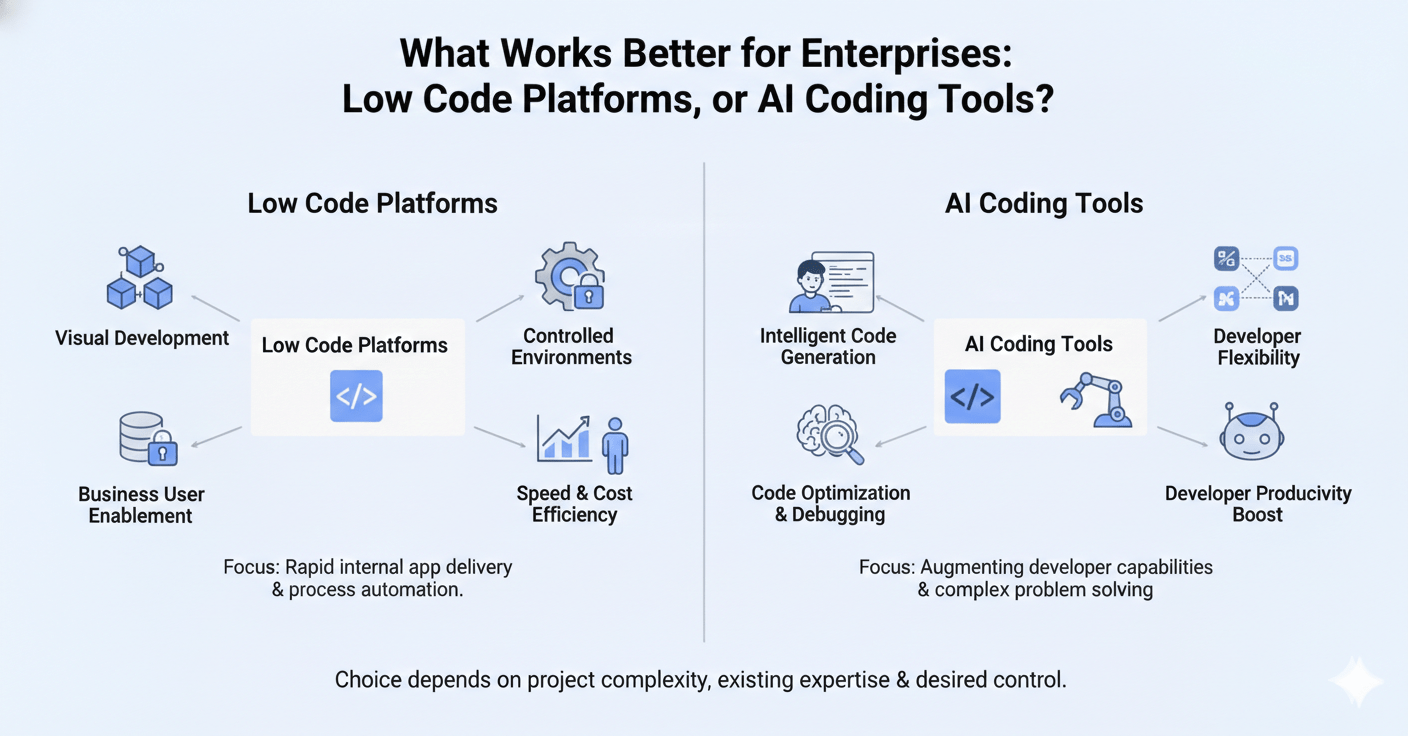
This is where Low-Code CRM software comes in. Low-Code gives businesses the power to shape technology to fit their needs. It makes CRM technology work for the business, not the other way around.
What This Guide Covers
With this guide, we hope to answer some pressing questions about and why low-code is the future, such as:
- What makes better with low-code?
- How does improve team efficiency?
- Why do so many businesses struggle with rigid CRM systems?
- Can low-code CRM software grow with your business?
- What are the cost benefits of using a low-code CRM?
- How does a improve customer relationships?
By the end, you’ll see exactly how empowers businesses to stay agile, user-friendly, and cost-effective.
Also read: Boost Your Sales Team’s Productivity with Low-Code CRM
What Is Low-Code?
To grasp what low-code is, we first need to look at the existing solutions for CRM software and why they often fall short. There are generally two approaches to implementing a CRM system: traditional custom-built (high-code) CRMs and off-the-shelf CRM solutions.
Both have their advantages, but their downsides have led to widespread CRM failures, making them less than ideal.
- Traditional High-Code CRM:
- Built from scratch with extensive coding.
- Downsides:
- Slow and costly development cycles.
- Can be cumbersome and ill-suited for certain industries, especially those without large sales or customer service teams.
- May not align with modern expectations for mobility, data insights, and productivity.
- Off-the-Shelf CRM:
- Pre-built solutions offered by vendors.
- Downsides:
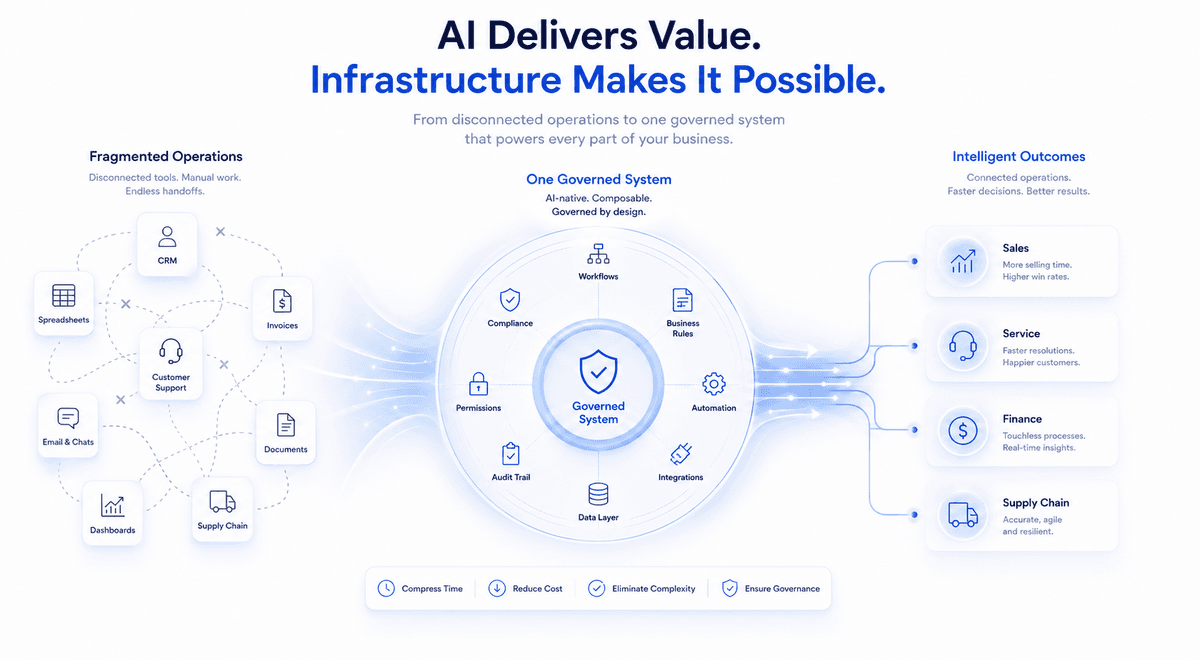
- Siloed systems that require juggling multiple apps.
- Hinder collaboration and efficiency across teams.
- Initial ease of use can decline as systems become intertwined.
- Maintaining multiple SaaS subscriptions can become financially burdensome.
- Often leads to a fragmented tech landscape with manual workarounds.
Low-Code emerges as a powerful solution.
It shifts the focus back to business needs rather than technological constraints. It reimagines how is built and used. Instead of being stuck with rigid, costly systems, businesses can now take control with that adapts to their workflows.
How does it work?
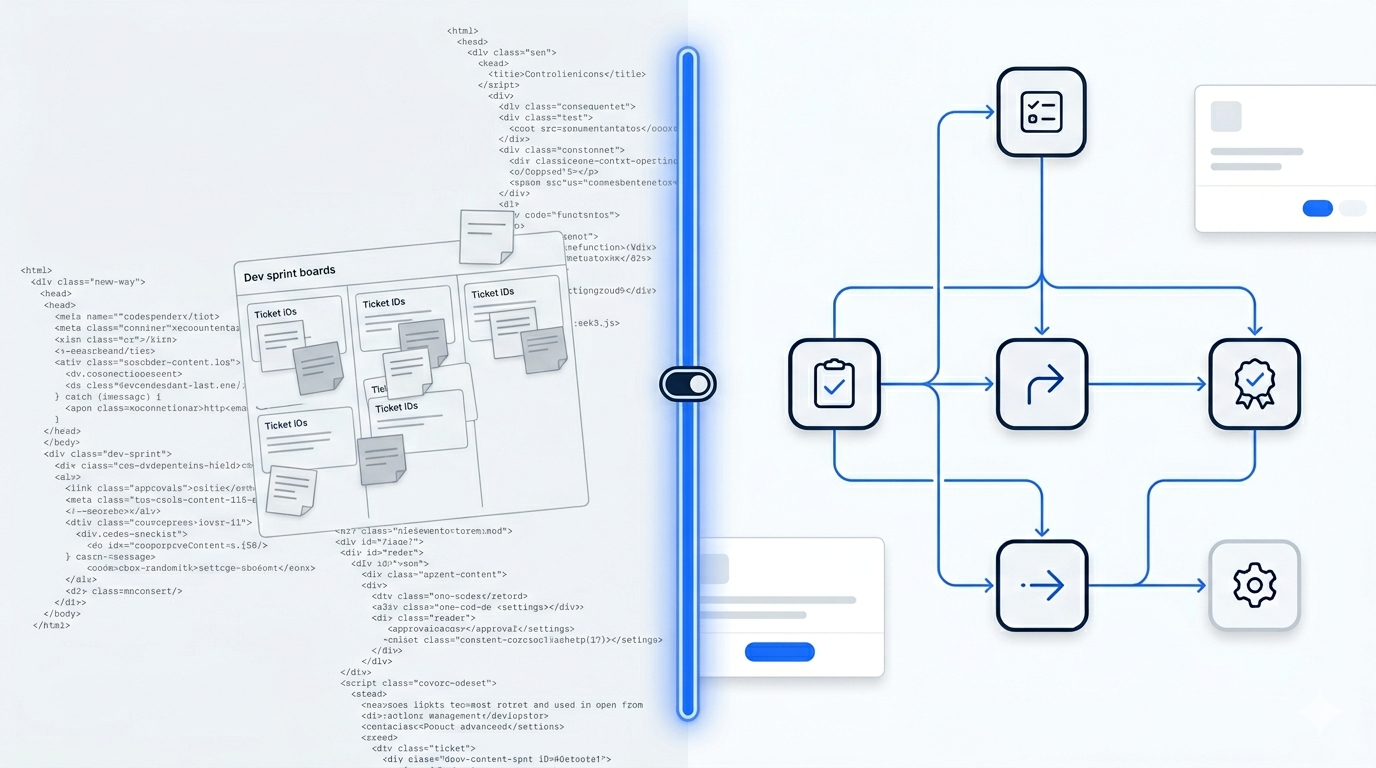
Think of it as a blend of pre-made building blocks and custom designs for creating a website. Instead of wrestling with lines of code, low-code platforms offer intuitive visual tools, like:
- Drag-and-drop interfaces for effortless arrangement of elements.
- Pre-built templates for common functionalities, saving time and effort.
- Customizable widgets to tailor the CRM software to specific needs.
- Connectors to seamlessly integrate with other systems, eliminating silos.
- Visual workflow diagrams to map out processes clearly and efficiently.
As you assemble these blocks, the platform automatically generates the necessary code behind the scenes.
This means:
- Non-technical users can actively participate in CRM software development without deep coding knowledge.
- Businesses gain control over the design and evolution of their CRM.
- Rapid application development becomes a reality, shortening time-to-value.
- Customization and flexibility are no longer limited by coding expertise.
In this way, low-code empowers businesses to speak the language of their processes and create that truly aligns with their unique needs.
Also read: Fix Your Broken Sales Processes with a Low-Code CRM
Why Is Low-Code Good For CRM?
Businesses often have similar experiences.
- May begin with basic tools like spreadsheets. As they grow, these tools can’t keep up. They need more, like automated processes and specific access controls.
- Many transition to Salesforce or another CRM software for sales. But these can be too complex for many users. Their interfaces might be overwhelming, making them less practical for everyday use.
This is where Low-Code CRM software shines.
Low-Code lets developers create custom parts that fit right into existing systems. This means a business can have a sales CRM software that looks and feels like it was made just for them. It can handle things like customer data, emails, and lead management in a way that’s tailored to the business.
Small companies often use basic CRMs or management tools. But as they grow, these tools can feel limited. Affordable CRM software offers a way to scale without massive costs. Low-code makes this happen. A small business can build what it needs on top of its current CRM. This could be anything from a simple way to track customer interactions to a full-fledged sales tool.
Every business is different. With , they can build CRMs that fit their unique needs.
Examples:
- A marketing agency can build a dedicated client portal within their CRM, enabling clients to easily access project updates, share feedback, and collaborate on campaigns.
- An e-commerce store can integrate its CRM with its website and payment gateways, allowing seamless tracking of customer journeys, purchase details, and support requests.
- A local brewery uses Low-Code to build a loyalty program portal within their CRM. Customers can easily track points, redeem rewards, and browse upcoming events, all within a branded, familiar environment.
When anyone can use it, that’s when you say that is a powerful democratization of technology. It empowers businesses of all sizes to take control of their customer relationships and build CRMs that truly drive growth and success.
The Benefits Of A Low-code CRM
Low-code CRMs are a game-changer, offering speed, user-centricity, and cost-effectiveness.
Let’s see how
- Quick Development and Deployment
Traditional CRM development can be slow and limiting. built with low-code changes this by offering rapid creation and deployment of CRM apps. You can build a custom feature, like a lead capture form, quickly and efficiently, bypassing lengthy IT processes.: A mobile app for capturing customer feedback at trade shows can be built in just a day, allowing for immediate data collection and enhanced market responsiveness
- Custom User Experience
Unlike one-size-fits-all CRM interfaces, low-code platforms allow for the creation of user-friendly, tailor-made interfaces. This customization improves usability, fitting the unique workflow of your team.: Marketing teams can design a CRM interface specifically for managing social media campaigns, simplifying their workflow and boosting campaign effectiveness.
- Improved customer interactions
Low-code CRM software enables the development of specific features and workflows to meet evolving customer needs. This adaptability enhances customer relationships and fosters loyalty.: A self-service portal in your CRM can offer customers easy access to FAQs and support ticket tracking, enhancing their experience and reducing support workload.
- Cost efficiency
Low-code CRMs are more budget-friendly, reducing the need for expensive developers. They allow for the creation of a CRM that aligns with your financial constraints and focuses on your essential business functions.: Build a CRM that centres on your primary sales and marketing needs, avoiding unnecessary costs for unused features.
- Security and scalability
Despite its simplicity, low-code CRM software doesn’t compromise on security. These platforms provide robust security measures and are scalable, growing with your business and data needs.: Create custom CRM interfaces in a secure environment, utilizing advanced security features like two-factor authentication and precise access controls to protect customer data.
What Amoga’s Low-Code CRM Offers
Amoga’s low-code CRM software stands out in a market where the term ‘low-code’ is often overused. Unlike many vendors who offer high-code CRMs with basic GUI configurations and label them as low-code, Amoga delivers a true low-code CRM experience. This platform empowers users to tailor the CRM to their specific needs, making it fast, affordable, and a priority.
Imagine a CRM that:
- Makes Lead Management Easy
You can gather leads from different places like phone calls, websites, and social media. The sales CRM scores these leads automatically, showing which ones might be more interested in buying.
- Let Your Team Connect With Customers Everywhere
Keep in touch with potential customers through email, phone, social media, and live chat. This helps in making sure no chance to talk to a customer is missed.
- Lets You Manage Deals Anywhere
Get important information about deals anytime you need it. This helps in finding chances to sell more or different products to your customers.
- Helps Field Sales
The sales CRM works well on mobile phones. It helps salespeople on the road with tracking, planning their visits, and finding the best routes.
- Is A Step Ahead With Reports and Insights
Get different reports like how well the sales team is doing, where opportunities were missed, what tasks are being done, and how engaged leads are.
This is just a glimpse of what’s possible with Amoga’s low-code CRM software. The true power lies in its flexibility. You can customize it to fit your specific needs, processes, and industry, creating a CRM that’s as unique as your business.
Stop saying “I wish my CRM could do that.” With Amoga, you can.
Curious to see how Amoga can help you? Request a free demo and discover how we’ve empowered others to:
- Boost lead generation by 30% with automated lead capture and scoring.
- Shorten sales cycles by 20% with streamlined deal management and field sales tools.
- Increase customer satisfaction by 15% through personalized omnichannel communication.
Don’t just take our word for it. See the power of Amoga in action.
Frequently Asked Questions - Low-code CRMs
What is a low-code CRM?
A low-code CRM is a customer relationship management system that requires little to no coding. It helps your business customize your CRM software as your customer-facing processes change. Your employees can use a low-code CRM to build the applications they need without having to code anything. In this way, any sales CRM software or service CRM software built on low-code is easier to maintain and grow along with the changing processes of your business.
How can I build a CRM without coding?
You can use a low-code CRM to build either sales or service CRM without coding or with very little coding. A low-code CRM development solution will offer you drag-and-drop features for easy customization. In this way, you can use a low-code CRM software like Amoga to build the CRM that you need without having to hire a huge team of developers.
Is there a free low-code CRM available?
Yes, there are some low-code CRMs that offer free plans, but they are more for a proof of concept rather than something you can actually use to build a usable CRM for your business. However, if you use a low-code CRM, you can build either a sales or a service CRM at just 10X the speed of traditional development and can reduce your costs by 75%.