Applications & operations Perspective
Fast and flexible low-code: why you don't have to choose
Discover how Indian businesses can achieve rapid development and customisation with a fast and flexible low code platform. Learn how Amoga delivers fast flexible.

In this article 0 sections
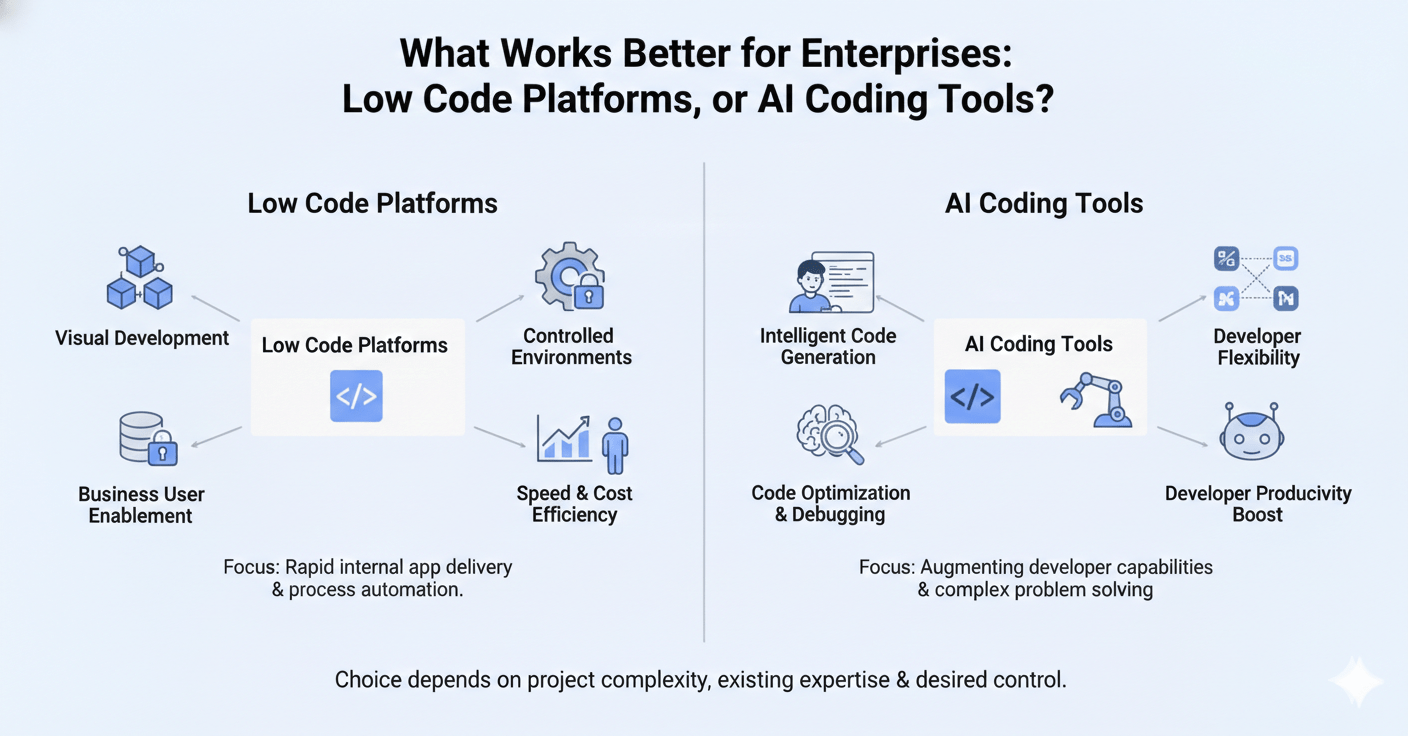
For a long time, many leaders believed that choosing a fast low code platform meant accepting limits on flexibility.
Today, that trade-off no longer applies.
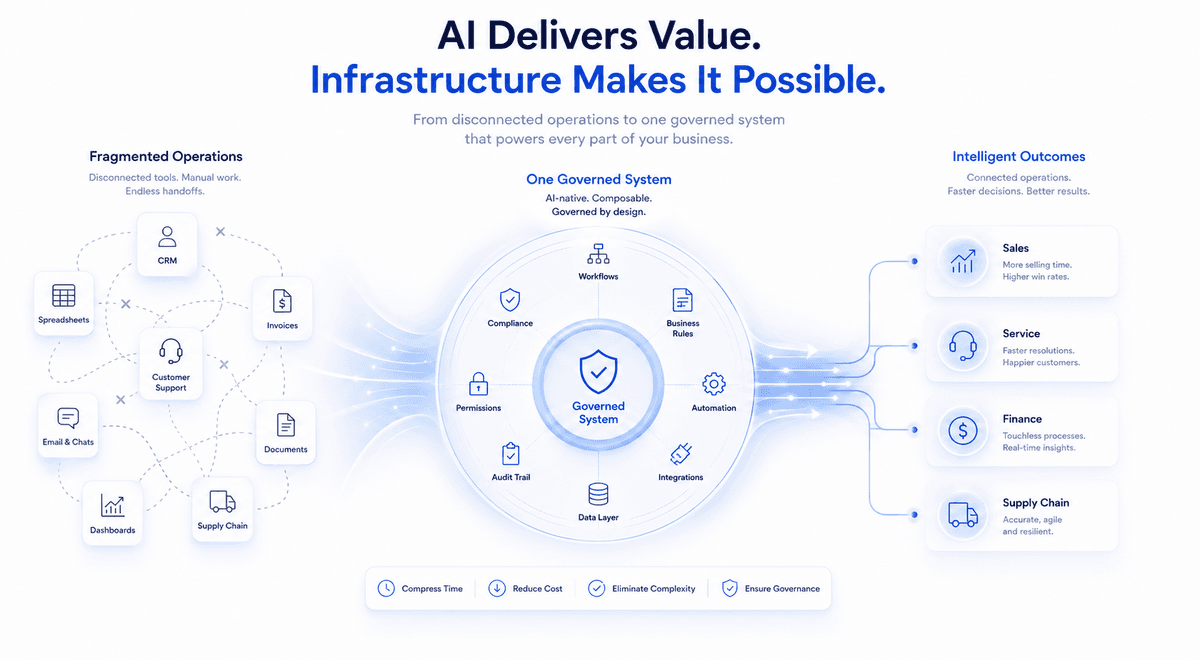
And that’s because modern low-code development platforms have changed the game for Indian enterprises. You can now build and launch critical applications quickly, and still meet complex needs around integration, customization, and compliance.
Platforms like Amoga are at the front of this shift, and proof that speed vs flexibility trade-off in low code is just a myth.
The key is to select technology that can deliver both.
In the following sections, we explain why both speed and flexibility matter, and how the right approach helps your business stay ahead.
Also read: Fix Your Broken Sales Processes with a Low-Code CRM – Amoga
Why Fast Delivery Matters for Indian Businesses
Time is money.
With low-code, organisations have seen application delivery times improve by up to 10x. Instead of waiting months for a new solution, teams can go live in days or weeks.
During the COVID-19 crisis, Indian government departments used low-code to quickly build apps for vaccine scheduling and tracking, and served millions efficiently.
Private sector examples include banks delivering ten new apps in under a year using low-code, all while being able to meet strict integration and security requirements.
Speed also means lower costs.
Studies show that low-code can reduce total development spend by up to 50%. This makes digital transformation accessible to more businesses, including those with tight IT budgets.
But speed alone is not enough. Most Indian enterprises need solutions that adapt to their unique processes, systems, and compliance needs. That’s why flexibility is just as important.
Why Flexibility is Critical for Indian Enterprises
Every business has its own way of working.
A flexible low code tool allows your team to build solutions that fit your specific workflows, data, and regulatory requirements.
Older low-code no-code platforms could only offer quick, basic apps. Today’s best low-code tools like Amoga allow you to use custom code, integrate third-party systems, and manage advanced business rules. This ensures you are not forced into a “one-size-fits-all” template.
For example:
● Indian finance firms need to integrate with GST, UPI, and RBI-compliant databases.
● Manufacturers require workflow automation tailored to their unique supply chain.
Low-code platforms now make all this possible, without the sacrifice of benefits.
Flexibility ensures your investment lasts.
As your needs evolve, you can add new modules or change business logic, all within the same platform. This future-readiness is a key reason why leading Indian companies are shifting to modern low-code.
To deliver both speed and flexibility at scale, the right platform architecture is essential.
How Modern Low-Code Platforms Deliver Both
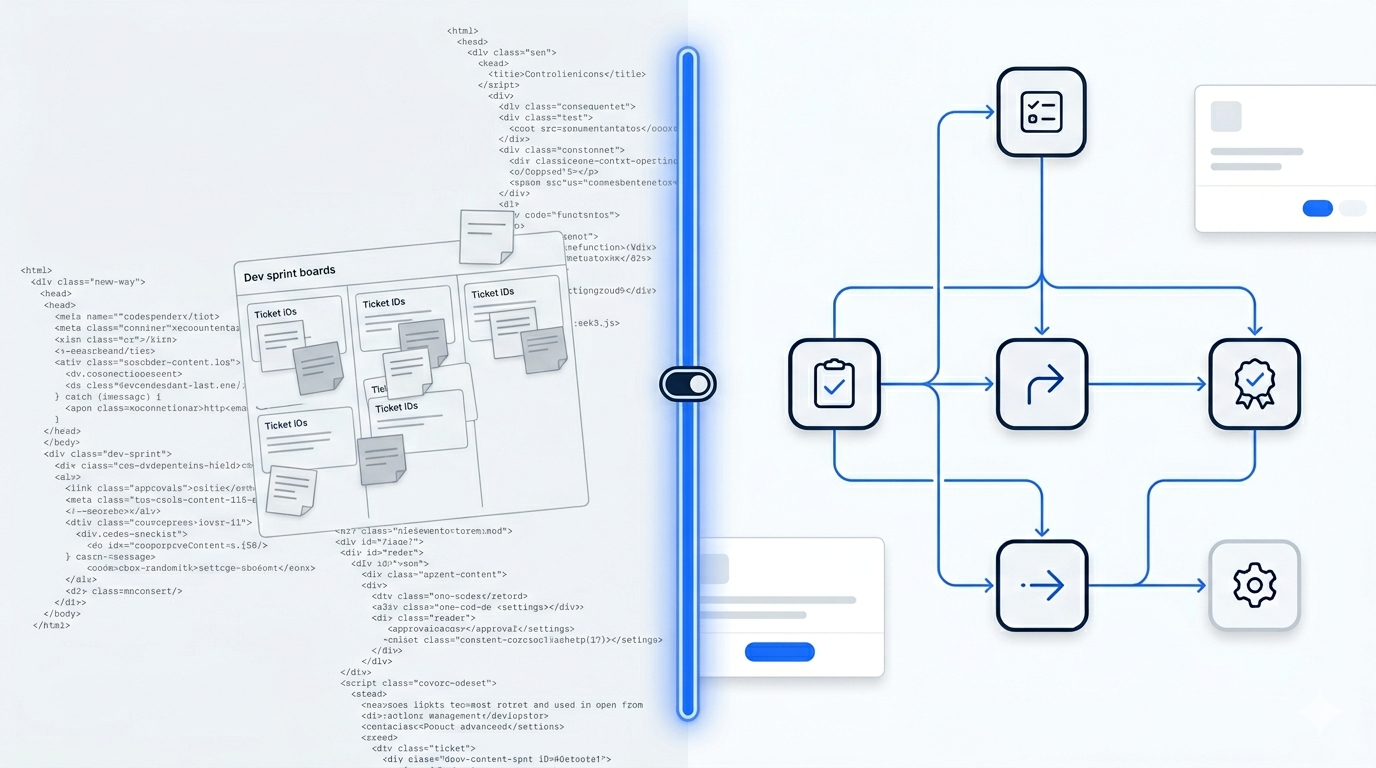
The best combines visual, drag-and-drop design with support for custom scripting and deep integration.
Today’s platforms (including Amoga) use a modular, microservices approach.
This means your team can develop, test, and update different parts of an application independently. Updates can happen faster, and new features can be added without disturbing existing systems.
A good example is the dual-track approach:
(business users) can quickly build basic workflows using simple, visual tools.
can add advanced features, integrations, or custom code when needed.
Modern low-code also includes built-in DevOps tools such as automated versioning and governance checks. This means your changes are secure and compliant from day one.
This openness and flexibility are crucial for Indian enterprises, more so when they need to integrate low-code apps with ERP, CRM, or even AI-driven tools, without the threat of being locked into a vendor.
Low code tools built using fast low code platforms are now a reality for Indian businesses.
With the right architecture, speed and flexibility reinforce each other, and help your teams deliver value faster and respond confidently to every new challenge.
Also read: Why businesses need Low code ERP’s – Amoga
How Amoga Gives You Both Speed and Flexibility
Amoga is built to deliver on the promise of a that is also highly flexible.
With Amoga, your teams can build applications using visual tools such as drag-and-drop pages, ready templates, and pre-built workflows.
This means business users (even those with no technical background) can quickly launch new apps for tasks like CRM, order management, HR, or compliance.
For deeper needs, Amoga supports in Python and JavaScript. This means your developers can easily add integrations and automate business logic. Plus, they can create custom modules to match complex requirements.
Amoga’s secret sauce is its microservices architecture for deployments. This lets your IT team update or expand any part of your application, without any risk of disruptions.
● Go live in days, not months.
● Achieve up to 50% cost savings.
● Customise every detail to your business needs.
● Ensure compliance and security with built-in RBAC and audit trails.
● Empower both business users and IT with speed for everyone, flexibility where you need it most.
Amoga’s approach means you don’t have to compromise. You get the best of both worlds ( and ) from one trusted partner.
How to Choose the Right Low-Code Platform: Key Questions to Ask
If you are evaluating scalable low code architecture or looking for a flexible low code tool, use this checklist:
When you choose wisely, you get a platform that grows with your business.
If you want to see this in action, .
Discover how you can build with both speed and flexibility, on your own terms.
Get hands-on: request your on-demand demo.