Applications & operations Guide
How to Optimize Service Costs With Low-Code Service CRM
As a customer service manager, you want two things: Lower costs of service High customer satisfaction scores But if youre like most managers, you low-code crm.

In this article 0 sections
As a customer service manager, you want two things:
- Lower costs of service
- High customer satisfaction scores
But if you’re like most managers, you secretly fear that these two wishes contradict each other. Traditionally, service managers feel they need more people and bigger budgets to deliver better service.
In fact, ‘gamification’ continues to be a buzzword in the customer service CRM software space. Both managers and tech companies push ‘contests and rewards’ as a way to motivate service teams. But this is a high-cost approach, relying on temporary spikes in motivation, often driven by financial incentives.
In reality, this is expensive, and worse, it rarely moves the needle.
If you’ve faced similar frustrations, you probably have no patience for one-time fixes. To truly solve this, you need a CRM software that enables smarter service operations at lower costs.
Of course, this isn’t the first time you’ve heard of CRMs. CRM software for sales and service teams has been around for decades. And yet, the struggle remains-how do you deliver exceptional customer service while keeping costs down?
With this guide, we hope to answer some difficult questions about CRM software for customer service and sales, such as:
- How does CRM software help in lowering service costs?
- What makes a customer service CRM software different from traditional solutions?
- Why do companies struggle with CRM software for sales and support even after years of using them?
- How does a low-code CRM change the game for customer service teams?
- Can you truly get an affordable CRM software without compromising features?
- What are the most common challenges in implementing a customer service CRM software, and how do you solve them?
Now, let’s dive into why traditional CRMs fail to deliver their promises-and how a low-code CRM can fix this for good.
Also read: Boost Your Sales Team’s Productivity with Low-Code CRM
Why does traditional service CRM fail to deliver their promises?
It’s this: there is a massive gulf between what a standard or even customised CRM offers, and what the customer service team needs. Customers are used to getting better service every day: proactive updates, multiple ways to contact service teams, and personalised touches. Those expectations keep rising. Brands that can deliver exceptional service at lower costs win, while others get left behind. But traditional CRMs aren’t built for this constant evolution; they’re too rigid to adapt quickly enough.
Even a heavily customised CRM soon becomes rigid because the cost of making it evolve with the needs of the team is untenable. Soon, there’s a growing gap, and people start hating their jobs because they’re spending all day struggling with vendors, sheets, and legacy systems. You don’t get time to improve things and end up running a web of processes and applications, not a business.
All that changes now, because of Low-Code service CRMs. Think of a Low-Code CRM as a system that you can shape like clay so that it mimics your business, your service goals, and your service team’s needs.
Let’s explore how a Low-Code service CRM can help.
Also read: Why EdTech Companies Need a Low-Code CRM
What is a Low-Code service CRM and how is it different?
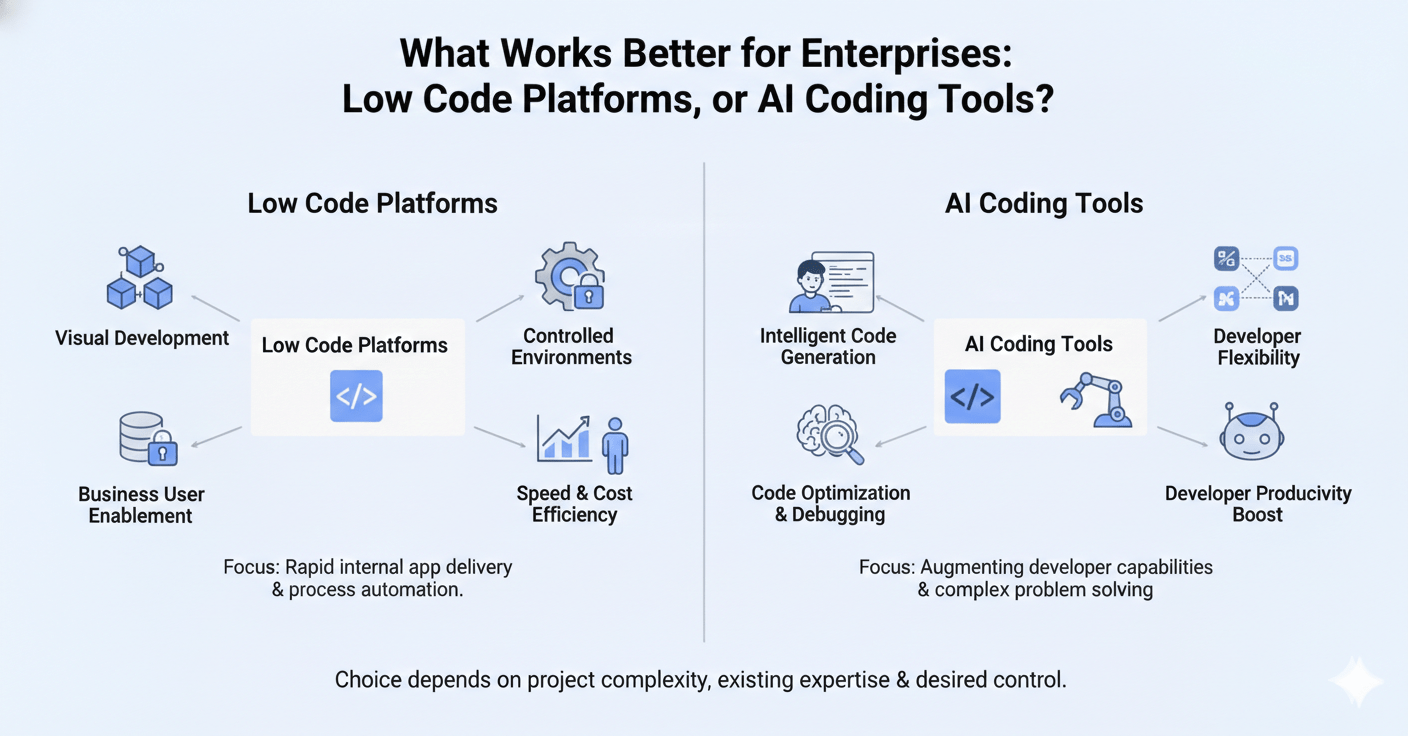
A Low-Code service CRM is a customer relationship management system that lets your service team create and tailor applications on their own, without needing extensive programming knowledge. Instead of relying on IT or the CRM vendor to code every new feature or customisation, your team can build what they need on their own or with little support.
Your Low-Code service CRM lets you quickly tailor forms, workflows, or reports with a simple click, not a complex code. This is important because this lets your team respond to customer needs or business shifts almost instantly, without the usual delays and frustrations.
Unlike traditional CRM software, which often requires extensive development time, a Low-Code CRM empowers teams to make changes on the go.
Best of all, this agility doesn’t require a tech expert. The intuitive interface and drag-and-drop tools make it easy for anyone to become a CRM builder. You take control, reduce costs, and gain the flexibility you need to deliver exceptional service.
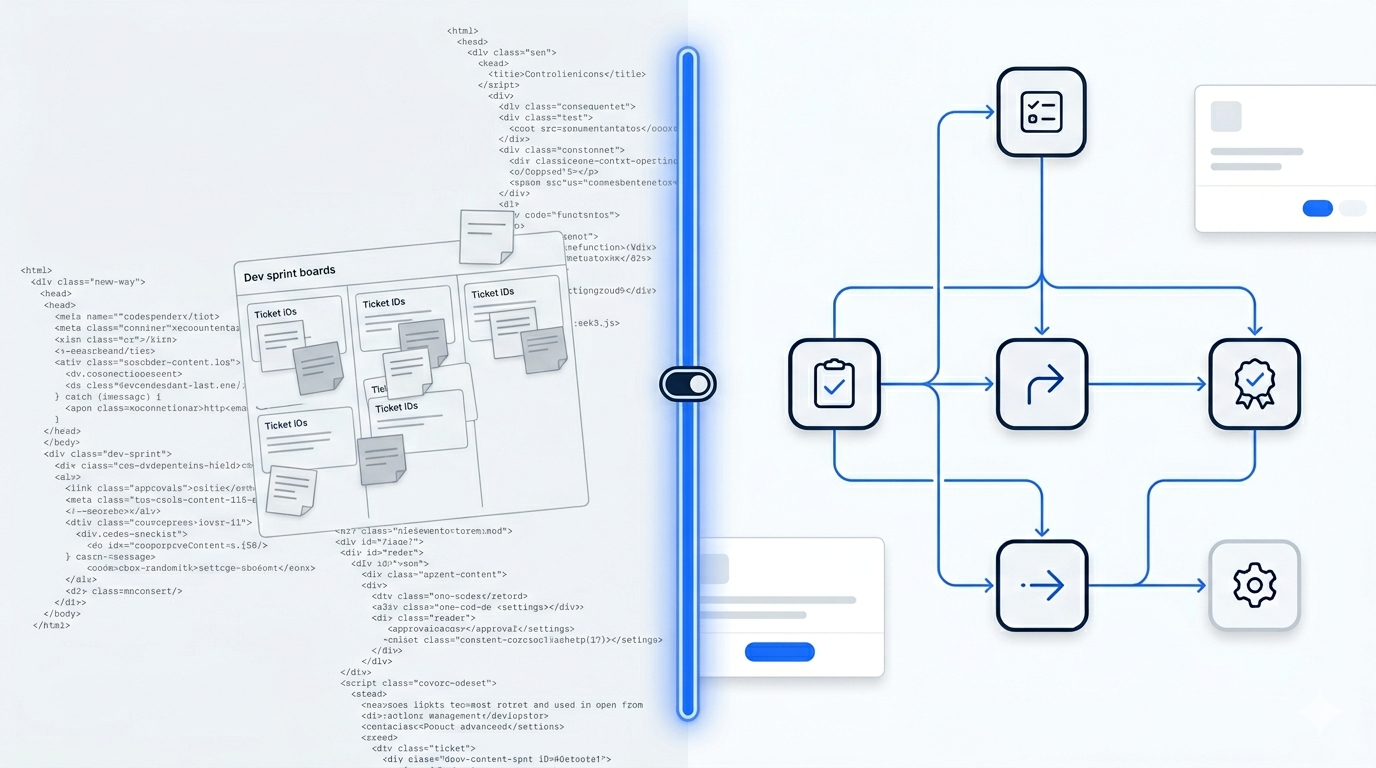
Essentially, with a Low-Code service CRM, you are moving away from the ‘code it line by line’ paradigm to the ‘design it on the screen’ paradigm. A user only has to stitch together the logic of the tool they need, and the Low-Code power of the CRM means it will generate the code automatically.
This is exactly what service teams need–a CRM that gives them the freedom to think ‘How do I make my work easier, quicker, more enjoyable’ rather than ‘How can I steer around this cluttered system of work, skip some steps, and save some time’.
A Low-Code service CRM makes this possible because it offers four major improvements over traditional systems:
- Drag-and-drop interface: Easily move elements and arrange them to design your application.
- Visual workflow builder: Create automated processes and workflows without writing code.
- Pre-built templates and components: Start with pre-designed templates and modify them to fit your needs.
- Data integration: Connect your CRM with other systems to streamline your processes.
But above all, here’s the biggest advantage of Low-Code CRM software: it’s about making technology work for your business, not the other way around. It lets you speak in the language of your work, and not the language of tech.
The power of a Low-Code service CRM
When this new approach of ‘help yourself to the tech you need’ meets service CRM, something amazing happens.
- Flexibility: You can customise forms, workflows, and reports to match your unique processes – no more waiting for IT to get around to it.
- Speed: You can build apps so much faster than traditional development. That means you can react quickly to new business challenges or customer demands without the delays of conventional CRM software.
- Ease of use: The visual interfaces are designed for anyone to understand, so even non-technical folks can make changes or add features.
- Cost-effectiveness: Because you don’t need a team of specialised developers, you save a ton of money on building and maintaining custom software.
It’s a game-changer for customer service teams who want to stay nimble and responsive. With a Low-Code CRM software, you get the agility needed to reduce costs while still delivering exceptional customer experiences. But can it help you reduce costs without compromising on customer experience?
How can a Low-Code service CRM end the cost versus quality tug-of-war?
When your service team uses a Low-Code CRM, three key actions become second nature, which lets service managers reduce costs without taking away service quality. These are:
- Automate
With CRM software for sales, automation also plays a critical role in managing leads and customer follow-ups.
Low-Code CRM lets you effortlessly automate repetitive tasks. For instance, if you’re an online retailer, your CRM can automatically tag incoming customer queries based on keywords like “shipping” or “return.” It can then route those queries to the right team member. Imagine how much manual work it will eliminate, how much time it will save, and how much better the first-response times will be, with this in place.
2. Integrate
The one thing that drains energy is the headache of juggling multiple systems. A Low-Code CRM seamlessly connects with your existing tools. An electronics retailer, for example, can integrate their CRM with inventory management. Now, when a customer asks for a refund because they received a faulty product, the customer service agent can stop worrying about juggling through refund policy documents, because all that info is linked from the product database into the CRM. So, questions that took 5 minutes to answer, now take half a minute to answer. More than the time saving, this takes away the cognitive pressure from the service rep, and lets them focus on making the customer feel good, rather than merely feel ‘responded to’.
3. Analyze
Cluttered IT means cluttered thinking. With a Low-Code CRM, this problem goes away. The result is that everyone has the mental freedom to ask the right questions because they know the answers won’t take forever.
For instance, as a service manager, think of what you can do when you gain a crystal-clear understanding of your customer service team’s performance. With nearly no extra effort, you can create dashboards that display real-time data on call volume, average handling time, and customer satisfaction. If you’re using CRM software for sales, you can track sales conversions, pipeline health, and customer engagement-turning data into actionable insights.
So when you want to find out which type of customer calls take up the most time, you have the answer ready in minutes, not weeks.
Together, these three things mean you can take your eyes off the road and focus on the destination. You know the problems you need to eliminate. You know who deserves a promotion, who needs training, and who might not be the right fit. You can make strategic decisions that improve your service and lower your costs.
If you feel this is something you can benefit from, you’ll love what we do at Amoga. Whether you’re looking for an affordable CRM software that scales with your business or a CRM software for services that simplifies processes, we’ve got you covered.
The Amoga Low-Code Service CRM Advantage
At Amoga, we believe that our low-code CRM system is the bridge between the promise of digital transformation and actually making it real. It’s about weaving technology into your everyday work, so everyone can enjoy their jobs and use their brainpower to solve problems that matter.
This philosophy is at the heart of our Amoga Low-Code CRM software for sales and customer service. We believe your organization owes it to your service team to make their work easier and more enjoyable, while also empowering service teams to manage leads, track interactions, and close deals more efficiently.
If this resonates with you, we invite you to see how Amoga CRM software can transform the way your service and sales teams operate.
Frequently Asked Questions – Low-code Service CRMs
What is a Low-Code CRM?
A Low-Code CRM is a customer relationship management system that lets you customize features without needing to write much code. Instead of relying on developers, you can use drag-and-drop tools to build the CRM the way you want-quickly and easily. It’s a flexible option for businesses that need something more customizable than off-the-shelf solutions but without the hassle of full-scale development.
How can I build a CRM with no-code or low-code tools?
Building a CRM with low-code or no-code tools is as simple as picking the right platform. Tools like Amoga allow you to create a CRM in just a few hours. You’ll start with a pre-built template, customize workflows with a visual builder, and connect it to other tools you use. No deep coding knowledge is needed-just a clear idea of what you want your CRM to do.
Does a CRM require coding?
Not always. Traditional CRM software requires coding to add new features. But with a Low-Code CRM, you can make changes with minimal coding or none at all. It depends on the platform-some allow full customization without code, others let you tweak advanced features.