Applications & operations Perspective
Breaking the Scaling Barrier: Low-Code for Sustained Digital-Native Growth
Breaking the Scaling Barrier: Low-Code for Sustained Digital-Native Growth Get Started Table of Contents Ninety-two percent of operations and supply-chain leaders...

In this article 0 sections
Ninety-two percent of operations and supply-chain leaders admit that their tech investments have delivered the growth they expected.
This is not without a known reason.
Primarily, integration complexity and data issues drag projects down (47% and 44% respectively), as per research published by PwC.
In other words, the market may be ready, but internal processes are not.
For fast-growing digital-native firms, this gap shows up as missed revenue and rising costs.
How can you be sure you are in the midst of this storm?
First, examine your ops leads and identify whether these pain points are a daily part of their teams’ experience.
as manual checks pile up
that push churn risk higher
in invoicing, inventory and reporting
for weeks
instead of improving processes
Each symptom chips away at customer trust and employee morale, and together they flatten the growth curve.
Understanding those root causes is the first step toward removing them.
Key Drivers of Operational Bottlenecks
-
E-commerce and ERP systems chosen for speed-to-market struggle once revenues pass the ₹5 crore mark, exposing performance and feature gaps.
-
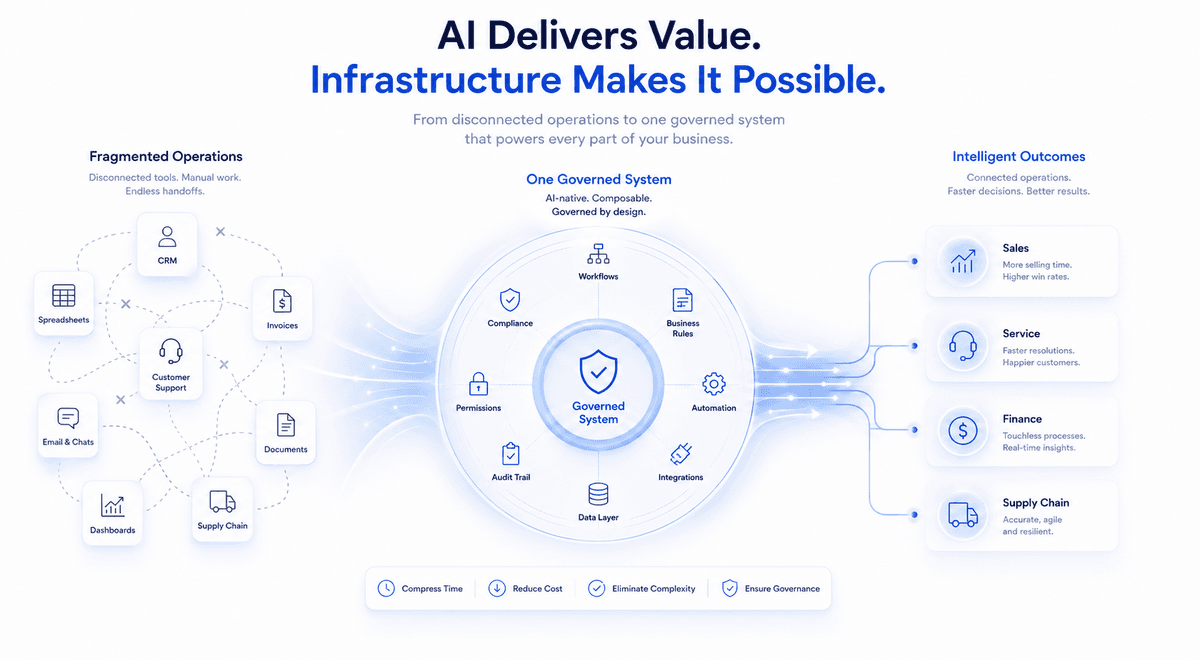
Almost half of COOs cite messy system-to-system links as the top reason scaling stalls. Hard-coded APIs make every new channel or partner a fresh project.
-
Eighty-one percent of senior leaders acknowledge that critical data is scattered across tools, blocking a single source of truth. Decision-makers waste hours reconciling spreadsheets instead of acting on insights.
-
Small development teams cannot keep pace with growing change requests, so business users wait or build risky workarounds.
Low-code Is The Fast Fix Your Ops Teams Need
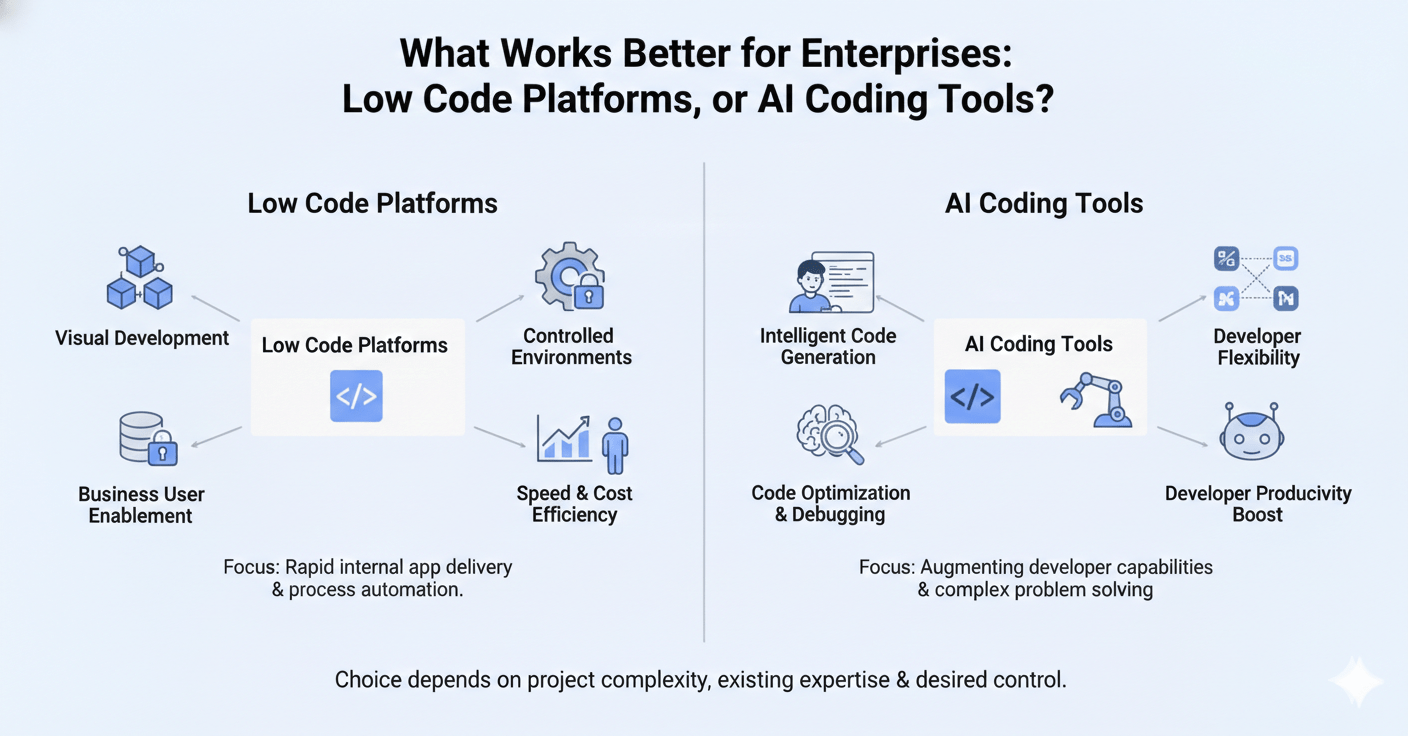
Gartner estimates that 70% of all business-app development will be done on low-code platforms by the end of 2025.
The shift is already visible in India, where NASSCOM pegs the local low-code/no-code market at .
Why the surge? Studies show low-code can deliver apps up to and cut build time by compared with traditional coding.
For COOs and CIOs facing a queue of integration and automation projects, those numbers translate into quicker wins and lower risk.
In the next section, we will see how a low-code platform such as removes each roadblock.
Why Amoga Makes Sense For COOs and CIOs
Amoga aligns with the operational realities of high-growth businesses:
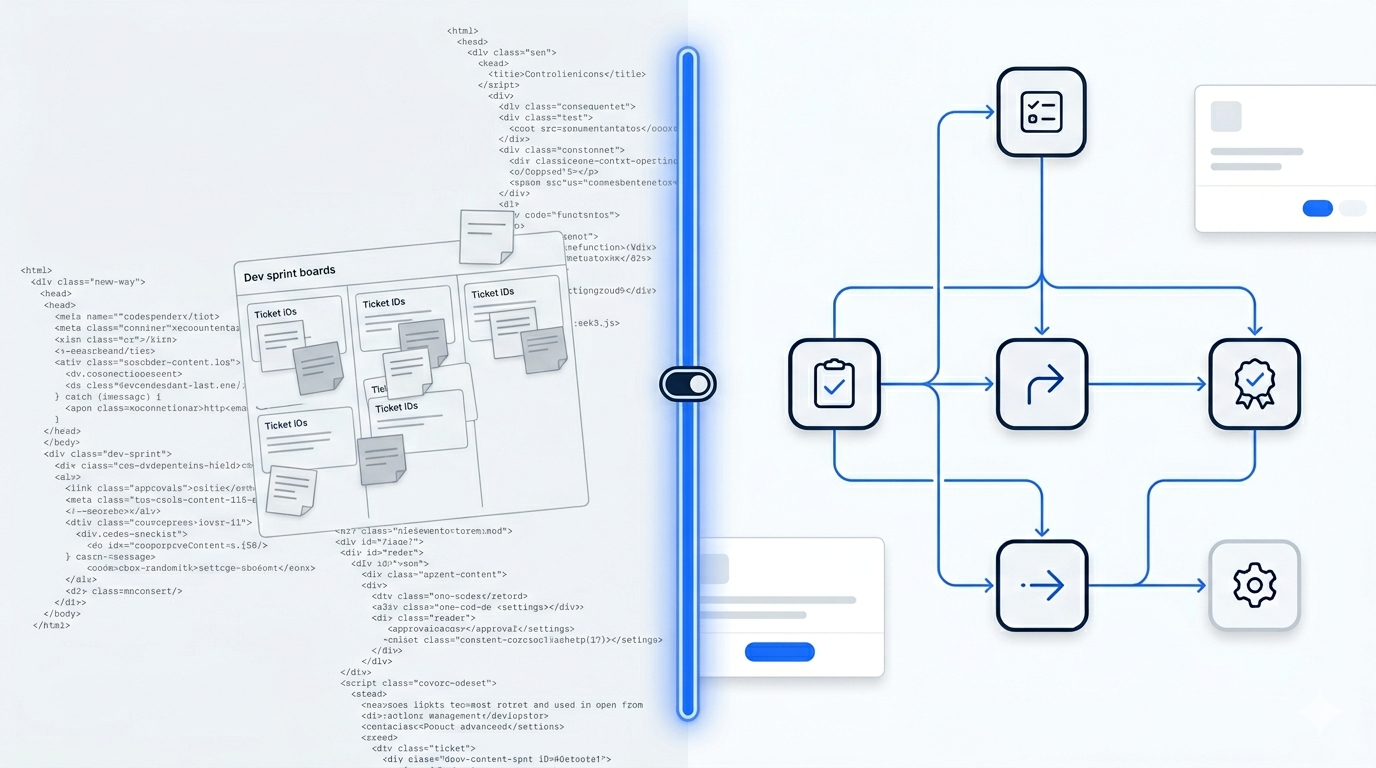
– Drag-and-drop builders allow process owners to ship fixes in days while IT governs reuse and security.
– Basic JavaScript or Python adds logic without heavyweight frameworks.
– SSO, OAuth 2.0, MFA, and full audit trails protect every transaction.
– OKRs, KPI dashboards, scorecards, and task flows come out of the box.
Customers report building solutions at when they switch to Amoga.
How Amoga Removes IT Roadblocks
Visual workflows route orders, inventory checks, and invoicing end-to-end, trimming cycle times by up to 50%.
A library of connectors plus configurable APIs link e-commerce, ERP, CRM, and finance tools in hours, avoiding weeks of custom code.
Real-time views merge sales, logistics, and finance data so managers spot a delay or stock-out before it hurts customers.
Role-based access, version control, and audit trails ensure compliance even as transaction volumes multiply.
Case Study – A D2C scale-up in Bengaluru Powered By Amoga Low-Code
A fast-growing personal-care brand hit and saw fulfilment slip beyond 48 hours. Using Amoga, a four-member ops team built a custom in three weeks:
● Integrated Shopify, Shiprocket, and Tally without custom code.
● Automated pick–pack–ship workflow and carrier allocation
● Added a live SLA dashboard for warehouse staff
● Order SLA improved to
● Error rate down
● IT change backlog cut
The same stack now supports with no extra head-count, which shows how low-code clears scaling barriers quickly.
In fact, when we speak with Indian COOs and CIOs, we usually recommend a that follows a simple, low-risk roadmap.
Try A One-month Low-Code Pilot
-
Pick issues that hurt revenue or customer experience-order delays, slow approvals, or missed SLA alerts.
-
Sign in to Amoga and import a matching template (e-commerce fulfilment, onboarding, finance sync, and more).
-
Form a joint squad of one process owner and one IT lead. Drag-and-drop the flow, add JavaScript or Python only where needed.
-
Connect live data, set up dashboards, and test with a small user group. Measure cycle time, error rate, and effort saved.
-
Validate the KPIs. If targets are met, roll the app to a wider team and select the next bottleneck for automation.
Pick a slot for a live walkthrough with our team.
Operational friction should never cap your market potential. lets you scale processes as fast as demand grows-securely and at a fraction of traditional cost.
today. We will review one of your current bottlenecks, sketch a pilot plan, and show how quickly you can move from backlog to breakthrough.
Book your personalised demo now and see Amoga in action.