Agentic enterprise software Comparison
Low code vs No code: A comprehensive comparison
Low code vs No-Code platforms: A comprehensive comparison Introduction The rise of Low-Code platforms and No-Code platforms has played an essential role in the 21st...
In this article 0 sections
Low code vs No-Code platforms: A comprehensive comparison
Introduction
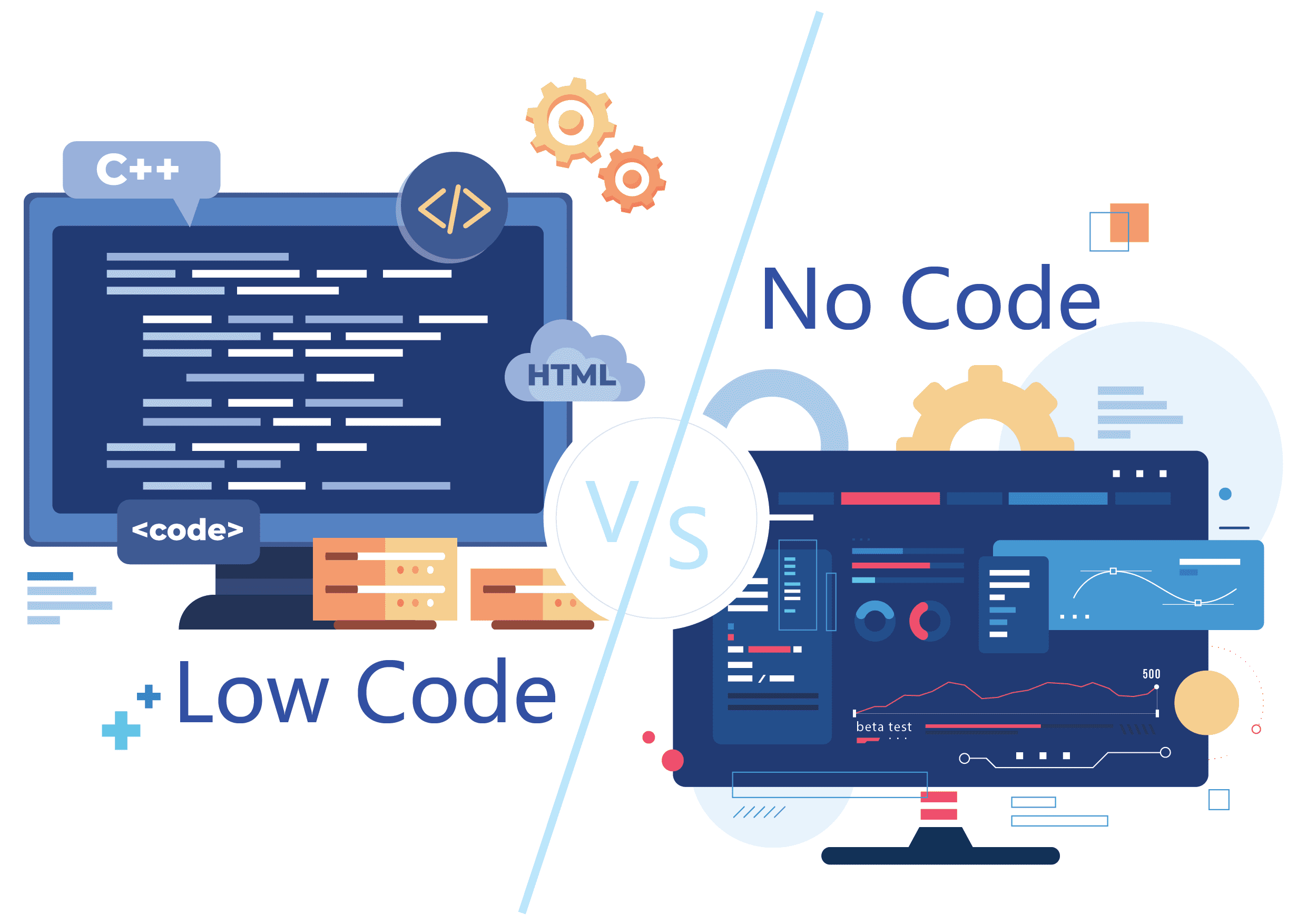
The rise of and No-Code platforms has played an essential role in the 21st century. These innovative technologies are not only making app development accessible to citizen developers but are also breaking down barriers and democratizing innovation across industries. Businesses today are increasingly recognizing the , as they provide faster development cycles and reduce reliance on traditional coding expertise.
The most common question raised about these platforms is: what is the difference between the two? Although they aim for the same goal-bringing speed to businesses by decreasing software development time in a go-to-market approach-there are several key differences between and platforms that impact their use cases and flexibility.
What This Guide Will Cover
With this guide, we hope to answer some important questions about and their impact on modern businesses, such as:
- What exactly is a , and how does it differ from No-Code?
- Are only for non-technical users?
- How can businesses leverage the to improve efficiency?
- When should you choose over , and vice versa?
- Can a support complex, scalable applications?
- What industries benefit the most from adopting ?
Let’s take a closer look at each approach to understand them better.
A refers to a development tool that empowers non-technical users to build applications without writing code. Instead of manually coding, platforms offer visual-based interfaces and pre-built templates, allowing users to simply drag and drop components into logical sequences to create fully functional business applications. In the background, the platform automatically generates the necessary code, making the app functional.
However, No-Code application development does have its own limitations. While it enables users to build applications rapidly, they are limited to the provided templates. This limitation results in reduced flexibility and scalability when attempting to incorporate highly customized features or integrate with existing systems.
For businesses that require extensive customization, understanding can and cannot do is essential in making the right choice.
As the name suggests, a Low-Code platform enables developers to write custom code when necessary to meet specific and complex business requirements. Unlike No-Code platforms, Low-Code development tools provide automation capabilities, component reusability, and integration features, making them capable of handling scalability and ensuring cross-platform compatibility.
In summary, Low-Code platform development offers a middle ground between traditional coding and No-Code solutions, making them suitable for a wide range of users, from citizen developers to software developers.
But what is a Low-Code platform, and why has it gained such popularity?
Low code vs No-Code: The differences
Now that you have a grasp of both and platforms, how do you determine the ideal choice for your needs? While these two simple workflow applications share many common traits, there are a few fundamental differences that are crucial to consider.
Businesses evaluating solutions must assess some crucial factors when exploring .
The following table presents the main differences between :
When selecting between and No-Code development for your project, it’s essential to consider your application’s specific requirements and characteristics. Here are some factors to keep in mind:
The Complexity of the Project
platforms are well-suited for applications that involve moderate complexity and customization. They balance visual development and the ability to incorporate custom code when needed. On the other hand, if your project is relatively simple and doesn’t require extensive customization, a No-Code platform might be more suitable.
Development Skills and Resources
If you have developers with coding expertise and the ability to write code, a Low-Code platform can provide the flexibility to incorporate their skills while benefiting from the visual development environment. On the other hand, if your team consists mainly of non-technical individuals or you have limited development resources, a No-Code platform allows you to create applications independently without relying on coding skills.
Time Constraints
Low-code development is faster than traditional coding, making it a quick way to get your app to market. But if time is tight and you need to build a lightning-fast simple app, No-Code is faster because it doesn’t involve any coding.
Scalability and Future Needs
platforms provide greater flexibility and extensibility, allowing you to incorporate custom code and integrate with external systems. No-code platforms, while more limited in customization options, are ideal for projects with specific requirements that foresee little future expansion.
Low-code software has versatile applications across multiple industries. Here are some prevalent use cases where has significantly improved efficiency.
Manufacturing Sector
Procurement Management
- Vendor Profile Management: Streamline vendor profile management by creating custom applications and simplifying the process of storing and updating vendor qualifications and pricing data.
- Purchase Request Management: Users can easily build purchase request systems to streamline and automate the request submission and approval process using tools.
- Purchase Order Tracking: Track and approve purchase orders in real-time with custom-built applications, reducing manual intervention.
- Procurement Analytics: Utilize reporting capabilities to generate detailed reports on procurement costs and trends, aiding in cost optimization.
Supply Chain Management
- Material Tracking: Track the movement of materials and products through the supply chain, providing visibility and control over the entire process.
- Supplier Relationship Management: Build applications to manage supplier relationships, enhancing collaboration and communication through solutions.
- Supply Chain Analytics: Generate reports on supply chain efficiency and costs to identify areas for improvement and cost reduction.
Healthcare Sector
Patient Management
- Outpatient and Inpatient Management: Efficiently handle patient admissions, discharges, and transfers, ensuring seamless patient flow within the healthcare facility.
- Patient Onboarding and Registration: Develop user-friendly onboarding and registration processes for patients, reducing paperwork and enhancing the patient experience with .
- Patient Portal: Create a comprehensive patient portal for appointment scheduling, accessing test results, reviewing medication history, and improving patient engagement and self-service.
Maintenance Management
- Maintenance Tracking: Efficiently track assets and equipment in healthcare facilities, ensuring timely maintenance and minimizing downtime.
- Maintenance Task Scheduling: Develop applications to schedule preventive maintenance tasks, ensuring the proper upkeep of critical equipment through .
- Maintenance Reports: Utilize reporting capabilities to generate detailed reports on maintenance costs and equipment repairs, aiding in cost control and asset management.
Financial Sector
Customer Onboarding
- Customer Profile Management: Low-code applications facilitate the creation and management of customer profiles, including critical information such as contact details, financial data, and risk appetite.
- Onboarding Process: The technology streamlines the customer onboarding process, including essential Know Your Customer (KYC) and Anti-Money Laundering (AML) checks, reducing manual work and ensuring regulatory compliance.
- Reporting: Comprehensive reports on customer onboarding activities are generated, offering valuable insights for decision-making and compliance audits.
KYC (Know Your Customer)
- Identity Verification: Applications simplify Know Your Customer (KYC) checks to verify customer identities and financial statuses, a crucial aspect of compliance.
- Automated KYC: The KYC process can be automated, ensuring adherence to regulations, including Aadhaar and PAN compliance.
- Activity Reports: Robust reporting capabilities provide clear overviews of KYC activities, aiding in compliance efforts and identifying areas for improvement.
Loan Origination
- Streamlined Loan Applications: assists in creating and managing loan applications, simplifying the process for both customers and financial institutions.
- Loan Origination Solutions: The loan origination process, including underwriting and verification, can be automated, enhancing efficiency and reducing processing time.
Conclusion
Both and No-Code solutions come with their own advantages. Choosing between the two can be tricky due to their similarities. The best approach is to look at your current needs and decide accordingly.
Get in touch with Amoga experts to embark on your journey today! Amoga is a solution that empowers businesses to build enterprise-grade applications and at than traditional software. Organizations can break free from complex software limitations with features such as Pre-built App templates, App Studio, Visual UI builders, Form Builders, and Customized Workflow.
Book your demo today and start building apps with Amoga.
1. What is a Low-Code platform, and how does it work?
A Low-Code development platform is a tool you can use to build apps with very little coding, mostly using visual tools. This type of software helps your business speed up application development, and your team won’t need deep programming skills. Currently, most Fortune 500 companies use Low-Code application development to build solutions that are both scalable and flexible.
2. What is the best Low-Code platform for businesses?
The best Low-Code platform truly depends on your needs. For example, do you need it for enterprise use or for a small business solution? You also need to understand that some Low-Code development platforms focus on ease of use, while others offer more flexibility for developers. Whatever LCPD (Low-Code Platform Development) you use, it should support integrations, scalability, and security.
3. Is Jira a Low-Code platform, or do I need something else?
Jira is primarily a project management tool. It is not a full Low-Code/No-Code platform. That said, it does have automations and features that allow you to build workflows, but a true Low-Code development platform offers much more flexibility for application building.
4. Are Low-Code platforms free, or do they cost money?
Some Low-Code platforms offer free plans with very basic features, but these free versions have usage limits. For most businesses, using Low-Code software is a way to avoid the costs of hiring large development teams. So, while they’re not free, a Low-Code development platform like Moga can save you about 75% on your application development costs.
5. What’s the difference between Low-Code and No-Code?
The simplest way to answer the Low-Code versus No-Code question is that Low-Code gives people the flexibility to use some coding skills to build advanced applications, while No-Code requires absolutely no coding. Obviously, with No-Code development, what you can build is limited to simpler apps.