Applications & operations Perspective
Ditch the Email Chains: Streamline Your Supply Chain Communication
Tired of inbox chaos? Learn how low-code workflows integrate with your legacy ERP to cut supply-chain approval times and raise visibilitysee Amoga in ditch email.
In this article 0 sections
Supply-chain professionals sign up for a life where they have to juggle suppliers, carriers, inventory planners, and finance.
Yet the channel that stitches them together is still the humble inbox.
For context, the average office worker is hit with roughly -a torrent that hasn’t eased even after two decades of ‘collaboration-tools’ hype.
Every new CC extends the thread for more people, but seldom sharpens the facts, and leaves critical updates buried in a growing pile of messages.
What’s worse: beneath those emails lurk sprawling spreadsheets that track quantities, lead times and exceptions.
Research shows .
When these error-prone files circulate by email, teams burn hours to reconcile versions instead of moving inventory.
Also read: Conquer Customer Chaos: How Low-Code CRMs Deliver Seamless Omnichannel Sales – Amoga
The Hidden Costs of Email-Driven Workarounds in Supply Chain Ops
Each “just checking” note lands on top of a global traffic stream exceeding . Because everyone keeps their own copy, PO numbers, ship dates and quantities get re-typed across inboxes, portals, and ERP screens. This inflates admin hours and pushes working-capital buffers higher. But duplication is only one facet of the risk; missing accountability can be even more damaging.
Email threads have zero built-in workflow logic.
A recent KPMG study found that while
When approvals sit in scattered mailboxes, audits come to a standstill, disputes linger for long, and recovery efforts grind to a halt.
McKinsey calculates that month-long supply-chain disruptions now strike every 3.7 years and can erase .
When vital context hides in fragmented email chains, response times stretch out, which leads to stock-outs, charge-backs, and premium-freight fees.
The channel itself-not your people-has become the bottleneck, which leads directly to the solution space we explore next.
Also read: Close Automation Gaps with Gartner’s BOAT & Low-Code
Low-Code: The Fast Track Out of the Inbox
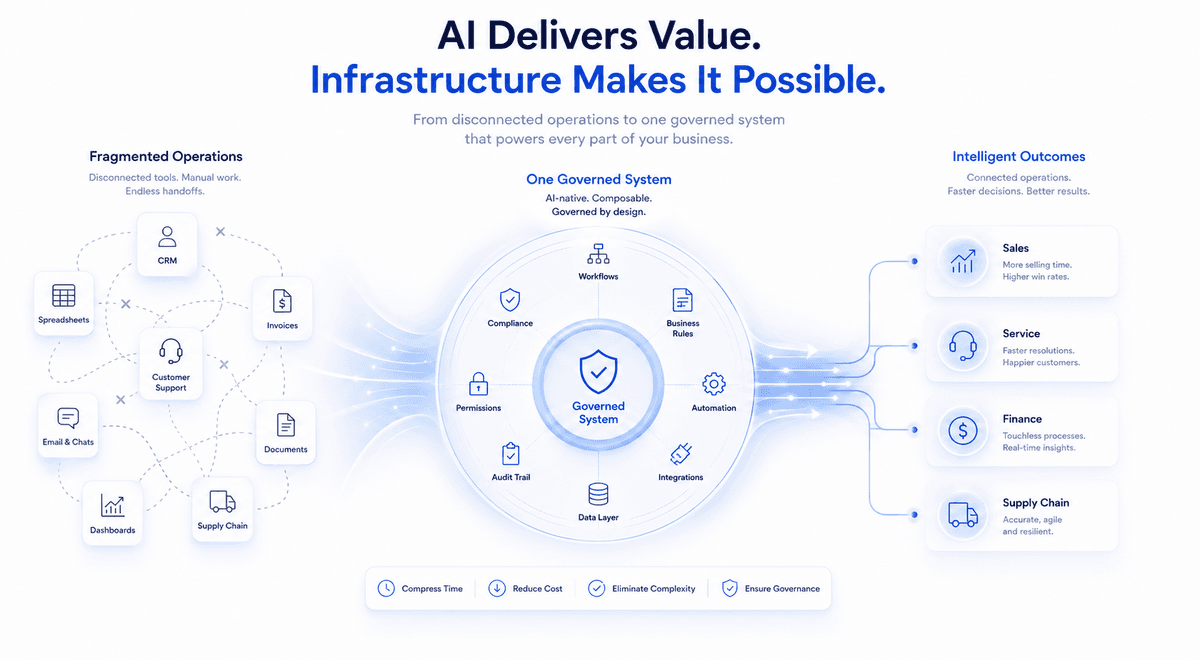
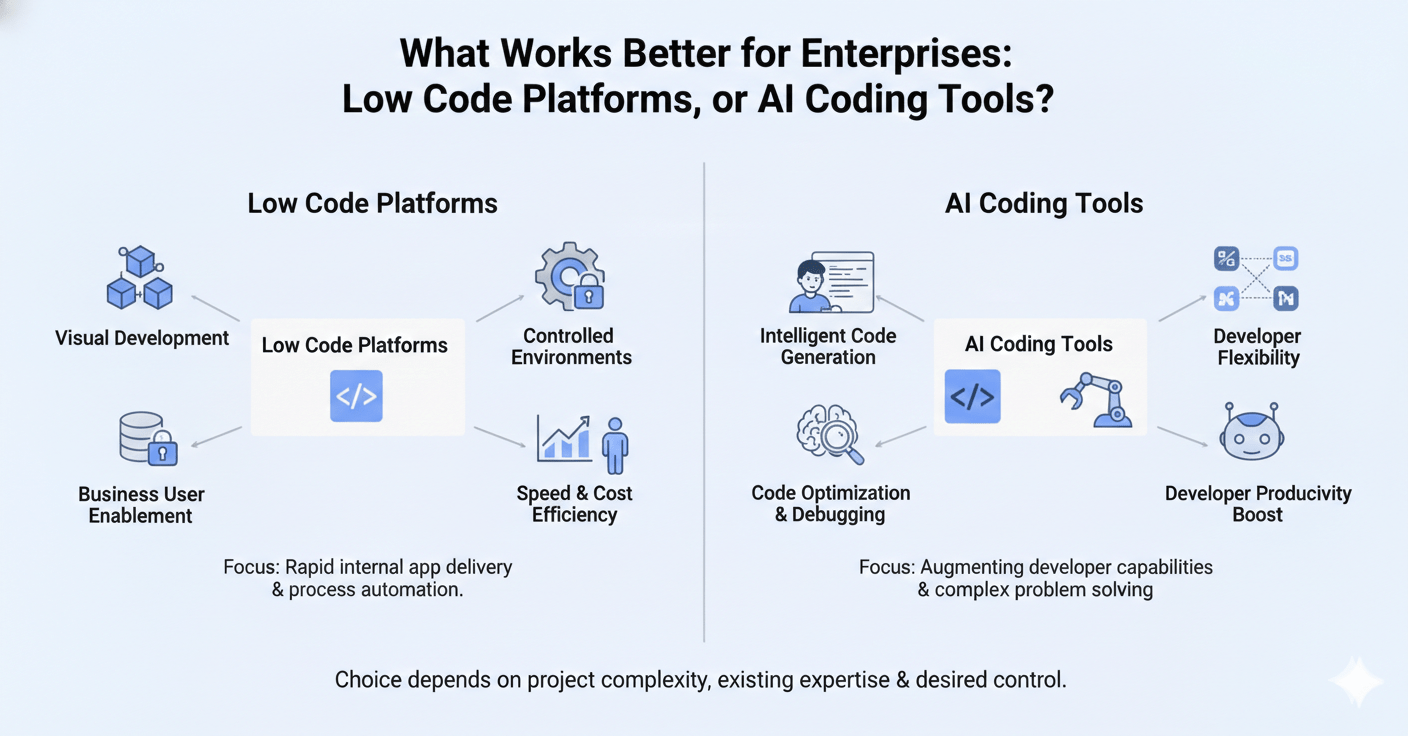
Low-code platforms replace sprawling email threads with supply-chain analyst can build these workflows.
Think of this: one form captures the PO data; rules then route tasks to buyers, finance, or logistics. This can cut cycle times from weeks to days and let continuous improvement keep pace with demand swings.
Enterprise-grade low-code . Pre-built connectors avoid the “time-consuming and expensive” custom integrations that plague traditional middleware. Analysts can surface ERP data in a modern UI while the system of record stays untouched. This gives your teams a single, real-time workspace.
In the next section, we’ll see how Amoga turns these principles into an email-free supply-chain workflow.
Amoga Turns Inbox Chaos into One Workflow
With low-code now proven as the bridge, Amoga provides the concrete on-ramp.
● Role-based workplace. The platform’s Workboard lays a single, role-based workspace where buyers, planners and suppliers comment in-context instead of swapping messages across silos.
● Centralized data + chat. Each purchase order (PO) or shipment lives as an object with embedded discussion threads and attachments, so the latest specification is always on-screen (no more version-hunting across mailboxes). Amoga’s Integration layer syncs those objects with your legacy ERP in real time, keeping the ERP the source of record while giving teams a modern UI.
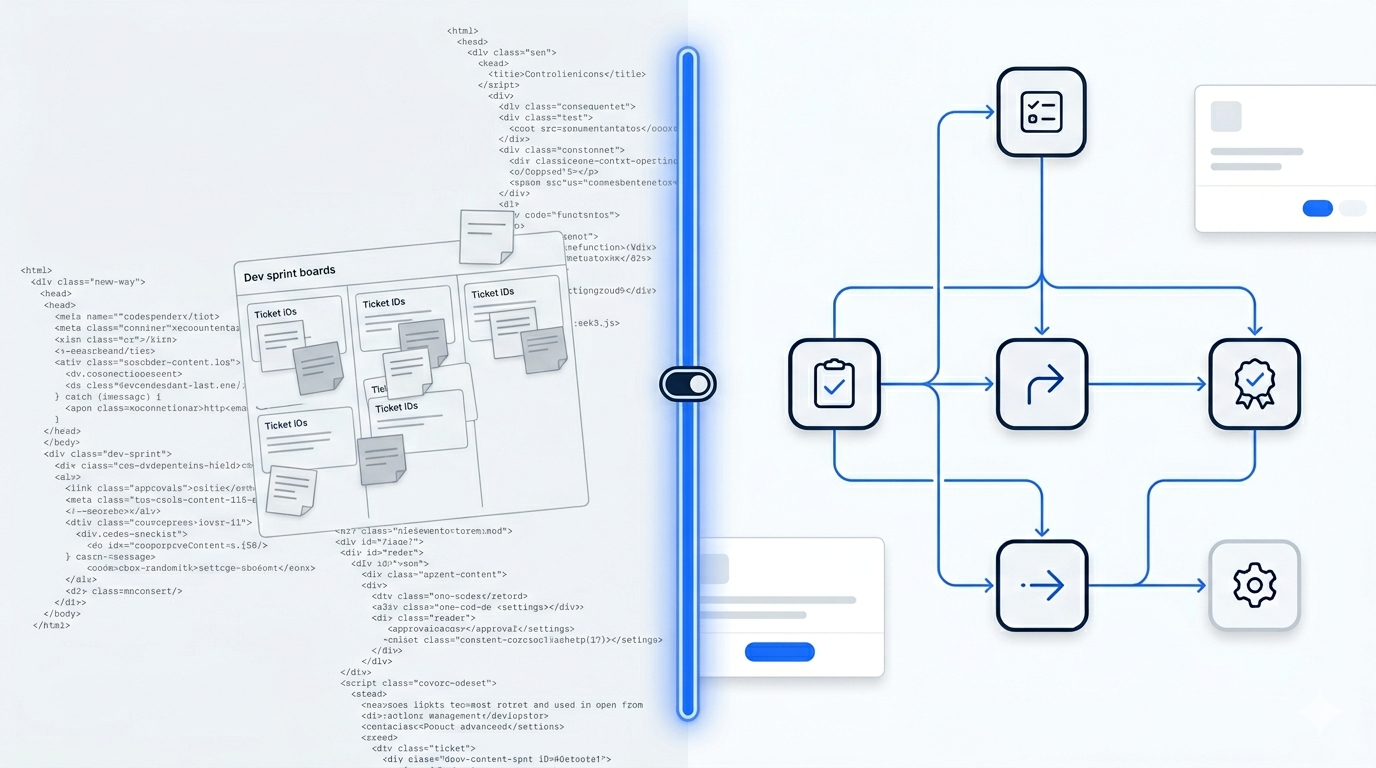
● Drag-and-drop workflow builder. Supply-chain analysts can draw approval logic-“PO > ₹50k → Procurement Head”-and deploy it without writing code. Companies that automate PO approvals typically cut median cycle time from 35h to 24h, a 31% improvement over email-plus-spreadsheet processes.
● Multi-channel, real-time alerts. Because Amoga exposes web-hooks and connectors, teams can push status changes into Slack or Teams, ensuring exceptions surface instantly rather than days later in a cluttered inbox.
● Immutable audit trail and reporting. Every click, comment and data change is time-stamped automatically. These functional blocks set up the P&L wins that leaders care about.
Why Leaders Feel the Positive Impact Of Low-Code on the P&L
● Forrester notes that visual low-code development can deliver applications than traditional methods. This lets supply-chain teams iterate almost in real time. Combine that with the 31% PO-cycle reduction above, and inventory turns accelerate without extra headcount.
● The University of Hawai‘i found that , a risk eliminated when data flows automatically.
● Gartner expects citizen developers to create 80% of low-code apps by 2026, while independent analyses show automation projects cut development and maintenance costs compared with conventional code.
Realizing those returns starts with an incremental rollout, not a big-bang overhaul. Here’s a playbook.
A Four-Step Roll-out Playbook
Map a single, high-volume process-often PO approvals or shortage escalations-and capture its current wait states. The future workflow should target the longest delay first.
Drag the process map into the builder, link mandatory fields to ERP tables, and set notification rules. For most teams this is a exercise, thanks to the 10× speed advantage documented by Forrester.
Run the new workflow with one buyer, one planner, finance and a key supplier. Use built-in dashboards to surface any data-quality issues early; tweak forms and rules on the fly.
Formalize naming conventions and approval limits, then let additional “citizen developers” replicate success across returns, freight claims, or quality-hold releases. Gartner’s forecast on non-IT builders underscores why a approach is enough.
Follow these four steps and your team is positioned to retire email chains-and the costly delays they cause-for good.
Bring Every Stakeholder into One View
Supply-chain work is too mission-critical to be scattered across inboxes and spreadsheets.
By shifting your high-volume email threads into Amoga’s low-code, ERP-connected workspace, you give teams a single source of truth, slash approval times, and regain the agility legacy systems once stole.
Start small with one workflow, watch the cycle-time gains materialize, and then scale the model across purchasing, logistics, and beyond.
Reserve a 30-minute demo tailored to your workflows.