Agentic enterprise software Guide
The Intersection of Low-Code Development and Artificial Intelligence
The Intersection of Low-Code Development and Artificial Intelligence Introduction The rapid evolution of technology has led to a new era in software development,...
In this article 0 sections
Introduction
The rapid evolution of technology has led to a new era in software development, where the demand for more efficient and user-friendly applications is higher than ever. The intersections of innovation often produce outcomes that transcend the potential of individual advancements. Two such transformative forces – low-code platforms and artificial intelligence (AI) – hold the promise of revolutionising the realm of application development.
The combination of low-code platform development and AI can revolutionize software development, and make it faster, more accessible, and more intelligent.
By exploring the , we can uncover new possibilities that empower businesses to innovate with ease. Before diving into how these technologies complement each other, let’s first understand their core concepts.
With this guide, we aim to answer some key questions about how and AI are transforming software development, including:
- What exactly is a , and how does it simplify software development?
- How does , and what are its real-world applications?
- What’s the difference between , and which one is better for your needs?
- Can support AI-driven automation without heavy coding?
- What are the for enterprises?
- How do scale applications faster while reducing costs?
- What future trends can we expect in the intersection of and AI?
These are some of the critical questions we’ll address, helping you understand why is gaining traction and how AI is amplifying its impact.
Before we delve into the synergy between low-code platforms and AI, let’s first understand these two concepts.
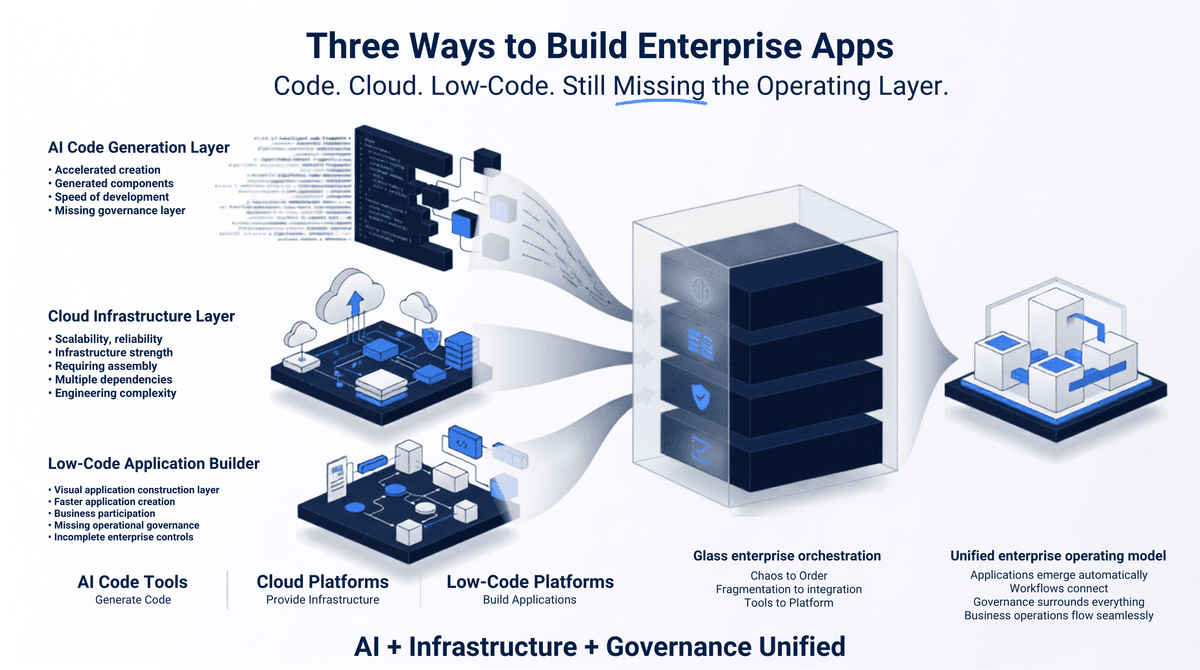
These platforms enable organizations to produce business applications more rapidly and to readily adapt them over time as business demands shift. It uses graphical interfaces and little-to-no coding. The graphical interfaces, pre-built templates, and drag-and-drop components streamline the application development process.
A low-code platform is designed to reduce dependency on traditional coding. It enables both professional developers and business users to create applications with greater speed and efficiency. With low-code platform development, businesses can accelerate digital transformation, automate workflows, and scale applications effortlessly-all without deep technical expertise.
Artificial Intelligence is a branch of computer science that focuses on creating intelligent machines capable of learning, reasoning, problem-solving and perception. AI has the potential to automate various tasks and processes, making them more efficient and accurate. AI encompasses machine learning (#ML), Natural Language Processing (#NLP), computer vision and more. AI in software applications helps developers create systems that can adapt to user needs, provide personalised experiences, and make data-driven decisions. AI is more likely to complement low-code platforms than replace them and to become more enmeshed within existing software development platforms.
The intersection of low-code development platforms and AI is marked by the following key areas of synergy:
Intelligence Automation:
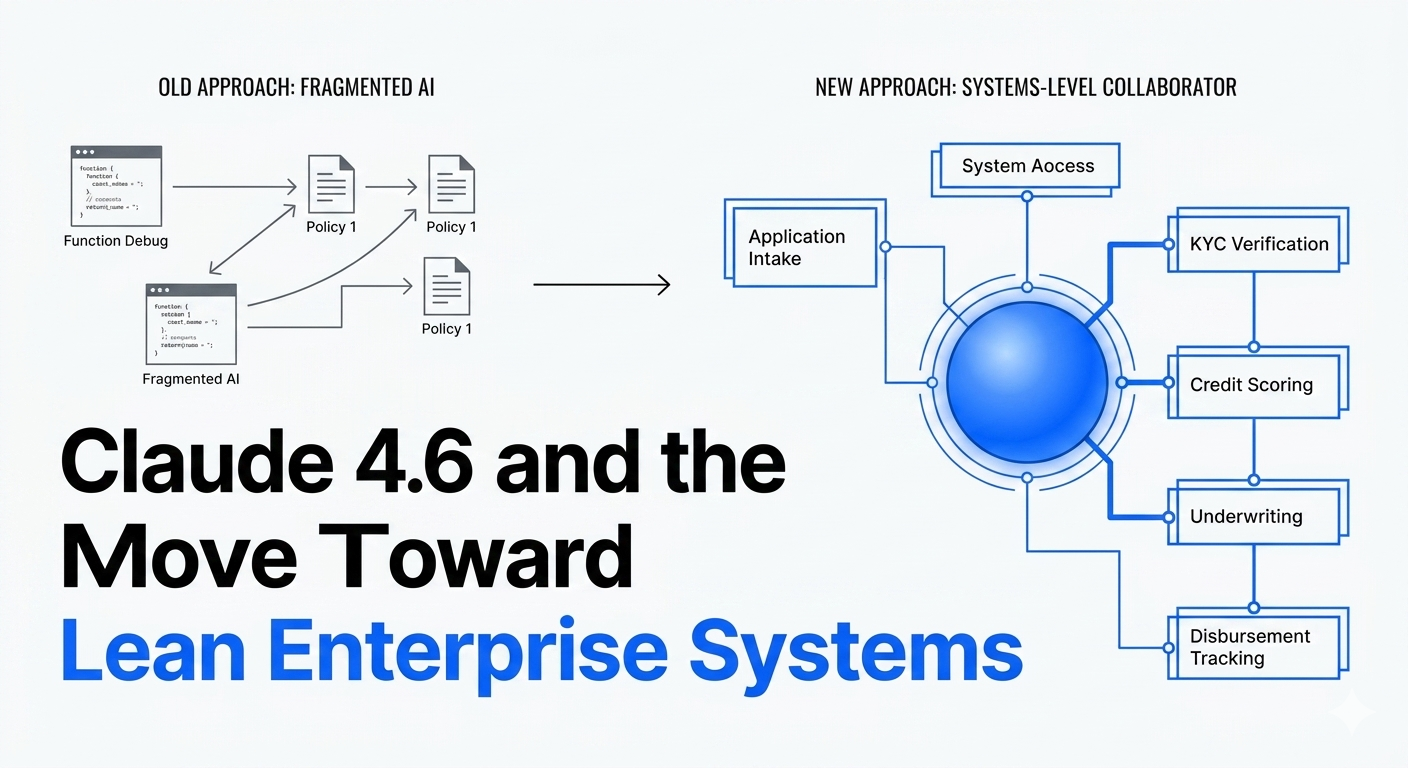
AI can automate many aspects of the software development process when integrated into low-code platforms. Given the natural language prompts, LLMs trained on large datasets can suggest new code snippets, reducing the amount of manual coding required. This not only accelerates Low-code development but also minimises the risk of human errors. In this way, businesses can create smarter, more adaptive applications with minimal coding effort, by combining AI-driven automation with no-code low-code platforms.
Predictive Analytics:
AI-driven predictive analytics can enhance low-code platforms by providing insights into application performance, user behaviour, and potential issues. Predictive analytics can help in decision-making by forecasting trends and suggesting improvements. Predictive AI assistants could suggest additional components, new databases to integrate, or different architectures within the context at hand.
Natural Language Processing (NLP):
NLP is a branch of AI that enables computers to understand, interpret, and generate human language. When integrated with low-code platforms, NLP can facilitate natural language interfaces for building applications. This means that users can describe their application requirements in plain language, and the platform can automatically generate the necessary code. In a no-code low-code platform, this feature allows business users to build applications without complex programming skills.
Low-Code Development and Artificial Intelligence
Cognitive services:
AI-powered cognitive services, such as image recognition and voice recognition, can be seamlessly integrated into low-code applications. This allows developers to create applications with advanced capabilities like facial recognition, chatbots, and voice-controlled interfaces without having to develop these AI components from scratch. Low-code platforms can act as a shim to abstract the complexity of integrating with API-driven AI services.
Data Integration and Analysis:
AI can assist in data integration, cleansing, and analysis within low-code development platforms. This is particularly valuable as modern applications rely heavily on data-driven insights. AI can help automate data processing, making it easier for developers to work with large datasets. Many no-code low-code platforms offer built-in AI tools that allow businesses to extract actionable insights without needing advanced data science expertise.
Testing and Quality Assurance
AI can enhance the testing and quality assurance processes for applications developed on low-code platform development environments. Automated testing with AI-driven test scripts can identify potential bugs and performance issues, ensuring that applications are reliable and efficient. AI can also be used to auto-suggest features, detect issues, and offer remediation advice. This could help spot errors in code, validate that code conforms to best practices, and suggest optimisations that avoid performance bottlenecks in Low-code development.
In this way, integrating AI with low-code platforms, businesses can leverage no-code low-code platform capabilities to streamline development.
- Accelerated Development
- Enhanced Productivity
- Democratisation of Development
- Improved Quality
- Better User Experiences
- Data-Driven Insights
Intersection of Low-Code Development and Artificial Intelligence
There are many parallels between Low-code development and AI. And the surge of new AI will undoubtedly augment the low-code experience. It will enable low-code platforms to offer more conversational code generation and plug-and-play AI components.
There are still a lot of areas and use cases yet to be explored when it comes to artificial intelligence and machine learning. However, businesses are already experiencing the benefits of low-code no-code platforms, such as reduced development time, lower costs, and improved accessibility for non-technical users.
Thus, the custom AI model-building approach isn’t going away anytime soon. Just like the AI wave was inevitable, so was the low-code wave. Gartner predicts that by 2024, 65% of the applications will be developed using low-code methods. In conclusion, low-code AI is an instrumental catalyst in transforming the landscape of software development.
Platforms like Amoga are paving the way for the broader adoption of low-code AI by offering user-friendly, flexible, and scalable development environments for building innovative and efficient AI-driven applications that cater to countless business use cases and challenges. Amoga’s low-code app builder isn’t just a tool; it’s an enabler of tailored AI solutions, tailored to the industry’s precise contours.
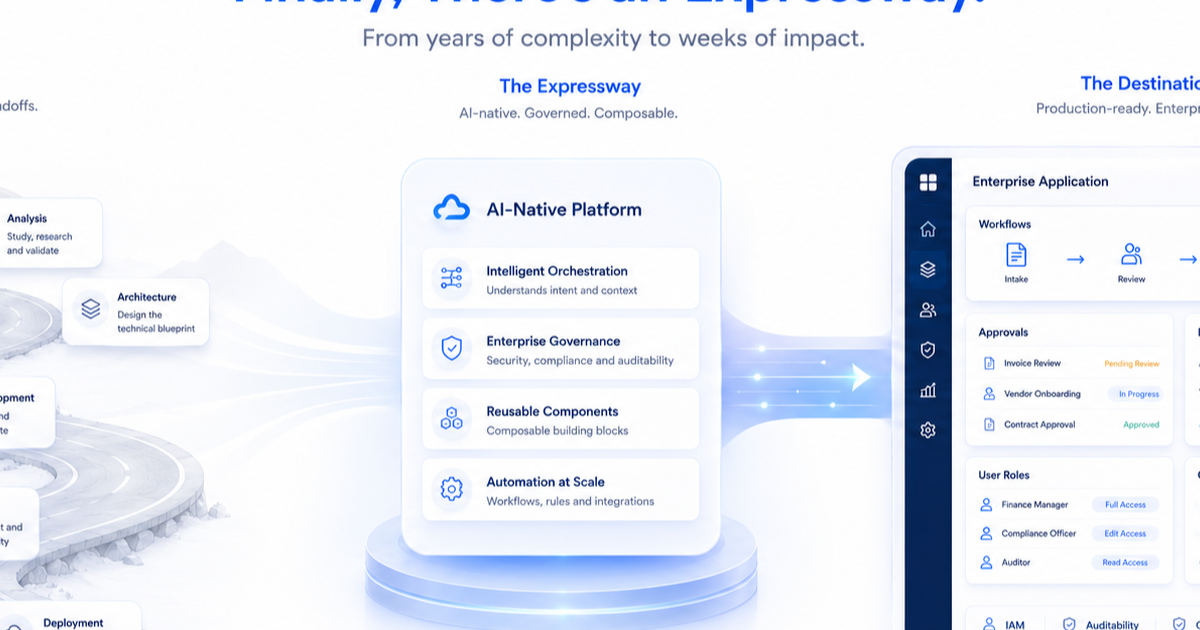
We at Amoga are building a low code no code platform that empowers businesses to build enterprise-grade applications 10x faster and at 25% lower cost than traditional software. Organisations can break free from complex software limitations with features such as Pre-built App templates, App Studio, visual UI builders, Form Builders, and Customised Workflow. Book your demo today and start building apps with Amoga.
Explore more Low-Code insights in our blog.
Frequently Asked Questions - AI and Low-Code No-Code Application Development
Artificial intelligence enhances low-code platforms by helping users accelerate app development. It empowers non-technical users to create applications quickly. The biggest use case is adding generative AI features to an application by using an API to leverage any of the popular foundational large language models. However, oversight of the outputs is strongly advised.
Yes. Using a low-code development platform, you can build applications that primarily depend on an AI tool, such as a large language model. A low-code or no-code platform lets you integrate AI through an intuitive interface, typically based on drag-and-drop systems, without requiring any programming expertise.
Low-code development means building applications with minimal coding. No-code development means building applications without using any coding at all. Low-code/no-code AI development refers to building applications that primarily leverage a large language model.