Agentic enterprise software Perspective
The Role of Low-Code Platforms in Digital Transformation
The Role of Low-Code Platforms in Digital Transformation Introduction The world of business has undergone a drastic shift in recent years, driven by the relentless...

In this article 0 sections
Introduction
The world of business has undergone a drastic shift in recent years, driven by the relentless march of technology. Digital transformation has become the mantra for companies seeking to remain competitive and relevant in a constantly evolving landscape.
This journey towards digital maturity requires businesses to embrace innovation and leverage technology to fundamentally reshape their operations and customer interactions. In this context, No-Code Low-Code platforms are emerging as a powerful force, empowering organizations to accelerate their digital transformation initiatives and unlock a world of possibilities.
The Rise of Digital Transformation
Even before the global pandemic, businesses were recognizing the critical role of digital transformation in driving success. From automating mundane tasks to creating personalized customer experiences, the potential benefits were undeniable. However, the pandemic acted as a catalyst, forcing organizations to rapidly adapt and embrace digital solutions to ensure business continuity.
The global digital transformation market is expected to grow to $1,009 billion by 2025 from $469.8 billion in 2020, at a CAGR of 16.5% during this period. This rapid shift highlighted the need for agility, flexibility, and scalability – qualities that low-code platforms are uniquely positioned to deliver.
What This Guide Will Help You Understand
With this guide, we hope to answer some difficult questions about and how they drive digital transformation, such as:
- What exactly is a , and how does it differ from ?
- Is only for IT teams, or can business users also build apps?
- How do help in automating business processes?
- What are the key benefits of adopting a for enterprise applications?
- How does impact businesses looking for faster development solutions?
- What kind of businesses can benefit the most from a ?
- Are there any limitations or risks involved in choosing a over traditional development?
By the end of this guide, you’ll have a clear understanding of how work, their advantages, and how they fit into the broader landscape of .
Let’s start with digital transformation.
The Benefits of Digital Transformation
The potential rewards of embracing digital transformation are manifold. Studies by Gartner reveal that over 56% of CEOs attribute increased revenue to digital improvements. The benefits extend beyond just revenue generation, encompassing areas like:
- Increased Efficiency: Automation and streamlined processes lead to improved efficiency and productivity across departments.
- Enhanced Customer Value: Tailored experiences and personalized interactions build stronger customer relationships and loyalty.
- Risk Management: Data-driven insights and predictive analytics help businesses identify and mitigate potential risks.
- Profitability: Reduced costs, improved efficiency, and increased revenue contribute to a healthier bottom line.
can amplify these benefits by enabling rapid development, automation, and integration across business functions. More than that, low-code no-code platforms can help businesses deal with the challenges of digital transformation.
But what are these challenges?
Challenges of Digital Transformation
Despite the undeniable benefits, digital transformation journeys are not without their challenges. 28% of companies report that digital transformation is still often perceived as a cost centre according to Brian Solis.
Some of the potential pitfalls include:
- Lack of Workforce Buy-in: Resistance to change from employees can slow down initiatives and hinder progress.
- Skill Gaps: Identifying and acquiring the right skill sets across the organization can be challenging.
- Measuring ROI: Quantifying the return on investment for digital initiatives can be complex and time-consuming.
can help overcome these challenges by making development more accessible. It can reduce reliance on highly specialized IT teams, and provide measurable business value faster.
The Role of Low-Code
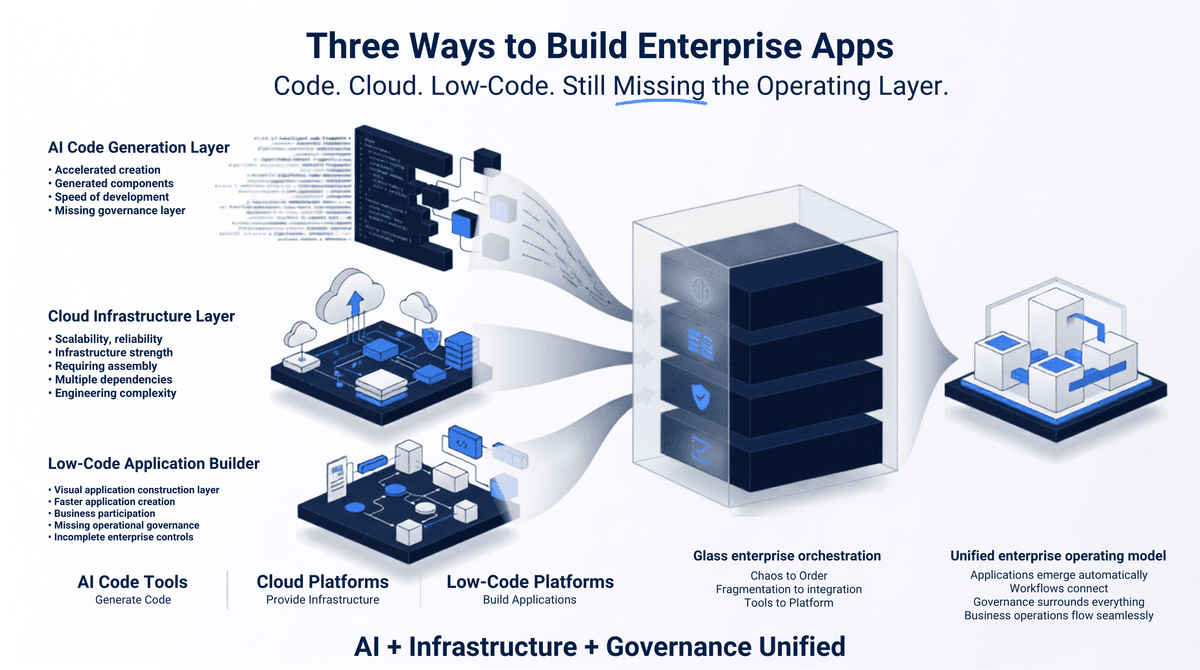
Low-code platforms are revolutionizing the way businesses approach digital transformation. They offer a compelling alternative to traditional development methods, empowering organizations to:
- Democratize App Development: Business users and domain experts can contribute to the development process, reducing reliance solely on professional developers.
- Reduce Costs: Rapid development cycles and minimal hand-coding lead to significant cost savings compared to traditional methods.
- Accelerate Development: Visual interfaces and pre-built components enable faster application development, allowing for quicker response to market changes.
- Improve Agility and Innovation: Low-code platforms facilitate rapid experimentation and iteration, fostering a culture of innovation and agility.
- Simplify Scalability: Platforms are inherently scalable, allowing businesses to easily adapt to changing needs without significant code rewrites.
So, .
Conclusion
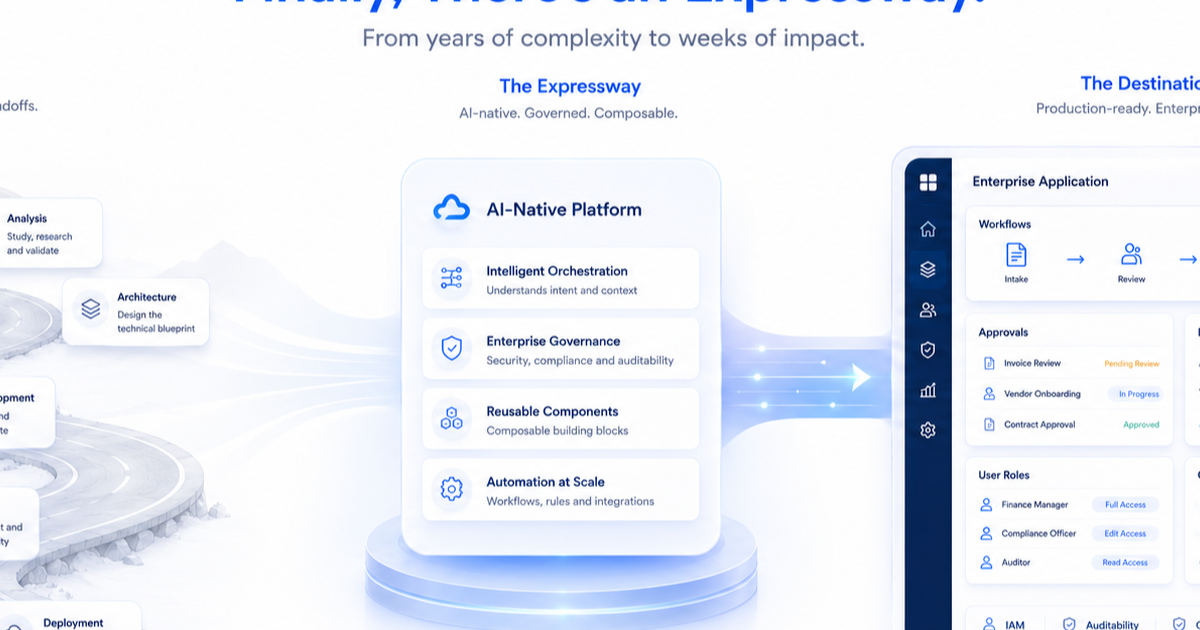
The future of business is all about speed, flexibility, and innovation. That’s exactly what Amoga, our low-code platform, is built for. It helps businesses move faster, build applications without heavy coding, and adapt to changing needs effortlessly.
With Amoga’s low-code platform development, companies can go beyond traditional software limitations. Instead of waiting months for new applications, teams can create solutions in days. This means more efficiency, better customer experiences, and faster growth
Today, businesses need smarter ways to build and scale, and Amoga’s No-Code Low-Code platform gives them the tools to do just that. Whether you’re streamlining operations or creating customer-friendly applications, Amoga makes digital transformation easier, faster, and more accessible for everyone.
The world is changing. Don’t get left behind. Start your journey with Amoga today and unlock the full potential of your business.
Frequently Asked Questions - Low-code No-code Platforms
A low-code platform is a tool that helps businesses build applications with minimal coding. It provides drag-and-drop components, visual development tools, and pre-built templates. This new paradigm of application development makes it easier for both technical and non-technical users to create software quickly.
Some of the best low-code platforms include Amoga, Mendix, OutSystems, Microsoft Power Apps, and Appian. These platforms are widely used for enterprise application development and digital transformation initiatives.
Yes, there are free low-code platforms that offer limited features for small businesses and individual developers. However, these platforms are not suitable for businesses because app deployment and management is very difficult on these.